
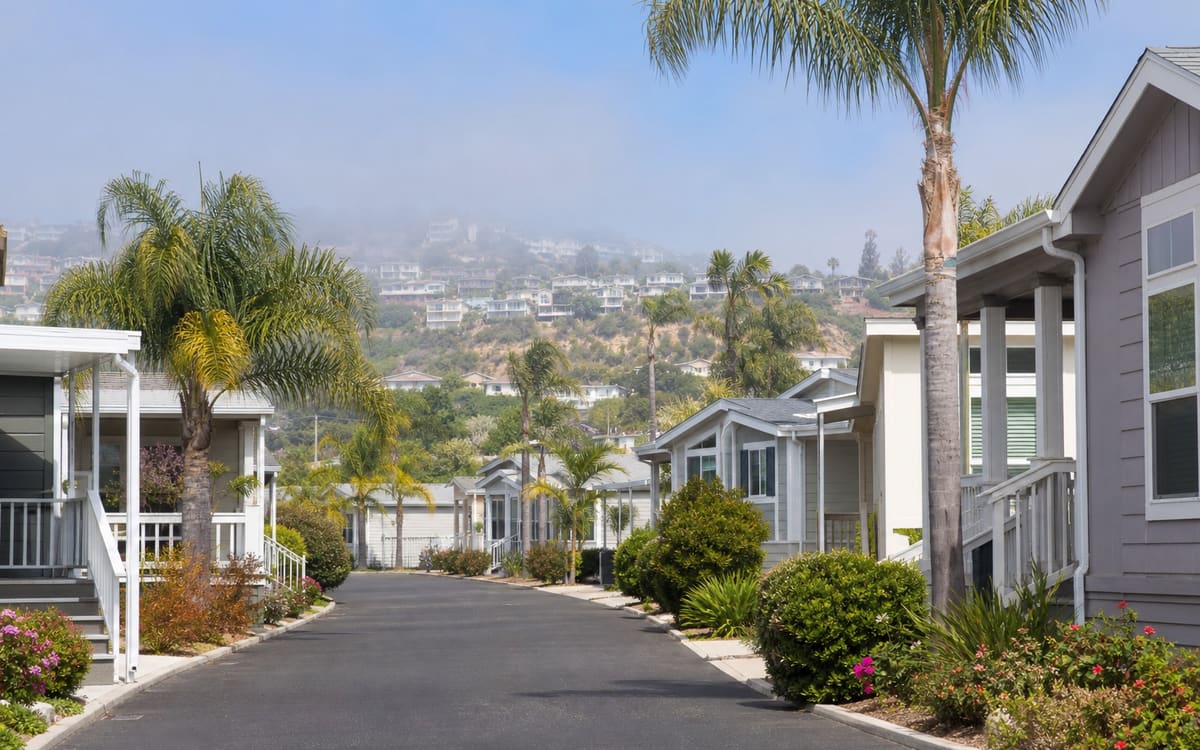
In Long Beach, a manufactured home for sale usually sits in an established mobilehome park. You buy the home and lease the space under it, so the land reaches you as monthly space rent rather than as part of the purchase price. That is why the home price alone tells you little about what you will pay each month.
For the loan, that setup means the home is financed on its own as personal property with a chattel loan, the title is handled through HCD rather than the county, and the community’s resident approval is a separate review from the lender’s. The California hub covers those statewide basics.
This page covers what is specific to Long Beach: who sets the space-rent rules, and the water, salt and seismic checks a coastal buyer should make before an offer. Santiago Financial, Inc. has financed manufactured and mobile homes in California for more than 50 years and reviews every application individually.
Space rent in Long Beach: what to ask, and who sets the rules
Ask the community for the current space rent, what it includes, the increase history for recent years and the lease term on offer, all in writing. Two homes at the same price can cost very different amounts to own once space rent is counted, and how space rent affects what you can afford shows the arithmetic.
The rules behind that rent come from more than one place. California’s Mobilehome Residency Law applies to every park in the state; HCD has a page on your rights as a mobilehome park resident and runs a Mobilehome Residency Law Protection Program for certain disputes.
Los Angeles County’s Mobilehome Rent Stabilization and Mobilehome Owner Protections Ordinance applies only in unincorporated areas, so it does not reach a park inside Long Beach city limits, and as of this update the city’s own tenant and landlord resources page describes no mobilehome space-rent ordinance of its own. Ask the community’s management, in writing, what governs increases for your space. This is general information, not legal advice.
Water, salt and shaking: the Long Beach checks
Four local factors change something about buying a manufactured home here, and each has an official map or page you can check before you commit.
Local factor, what it changes, and where to check
| Local factor | What it changes for a buyer | Where to check |
|---|---|---|
| Flood zones | Lenders can require flood insurance for a home in a mapped high-risk area, and it is a separate policy; the city notes that FEMA will map areas behind the Dominguez Channel and Compton Creek levees as a flood zone | The city’s flood hazard page and FEMA’s Flood Map Service Center |
| Tsunami hazard areas | Shoreline and harbor-edge spaces may sit inside a mapped tsunami hazard area | The California Geological Survey’s Los Angeles County tsunami maps |
| Earthquake faults | The 1933 Long Beach earthquake was on the Newport–Inglewood fault zone; homeowners policies do not cover quake damage | The CGS EQ Zapp parcel map and the California Department of Insurance earthquake guide |
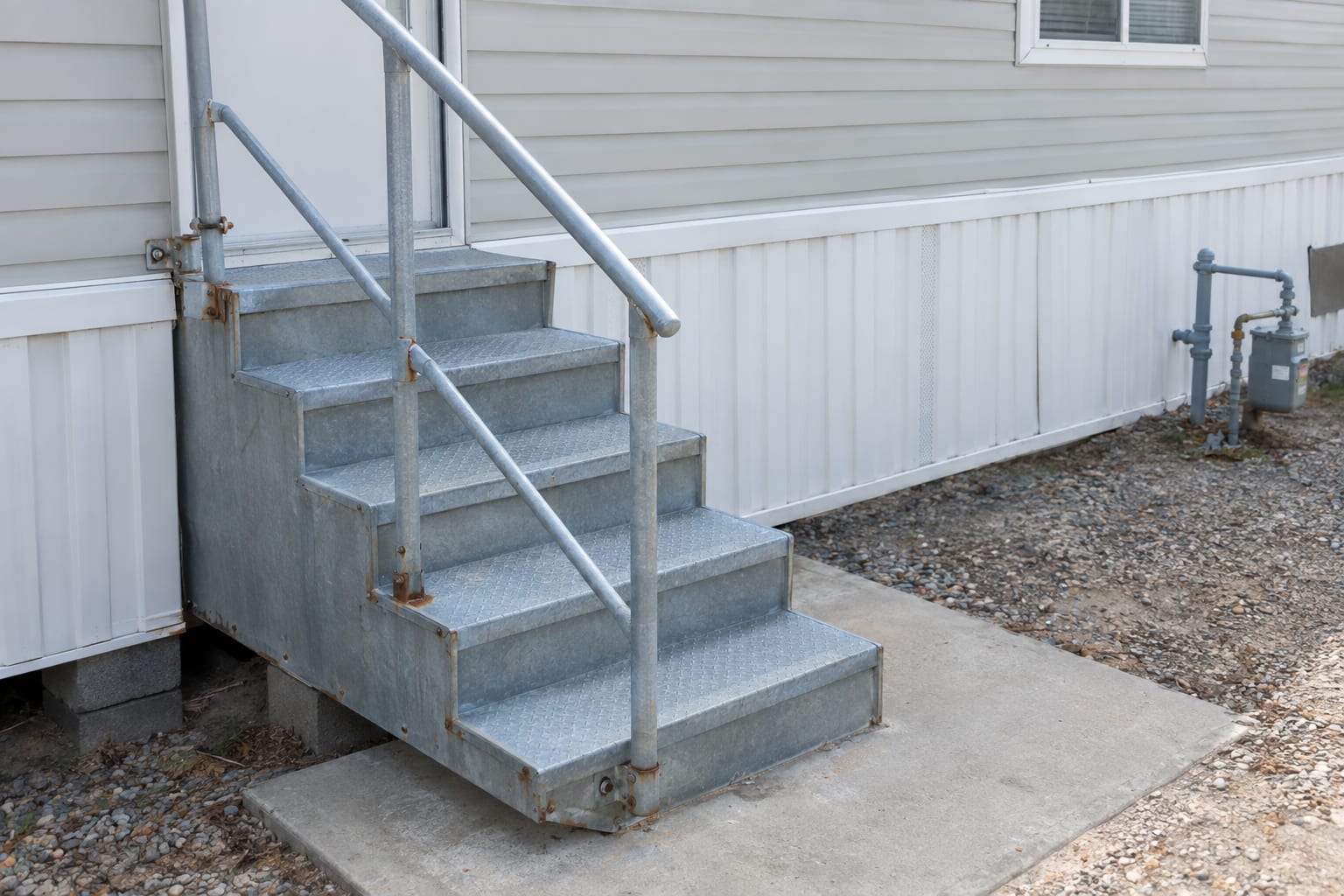
| Salt air | Moisture corrodes roof fasteners, steel piers, tie-downs, skirting and railings on older homes | Your inspector; see inspection vs appraisal |
The earthquake row deserves one more sentence. Ask the seller whether the home has an earthquake-resistant bracing system installed under it; the California Earthquake Authority says a seismic retrofit can make a manufactured or mobilehome more resistant to shaking, and it offers a premium discount for a properly retrofitted home. Whether a program requires earthquake coverage varies, so ask before you shop for the policy.
Older homes carry older paperwork
A home for sale in a Long Beach park can be any age, and its age sets two things. The first is whether it is a HUD Code manufactured home (built on or after June 15, 1976) or technically a mobile home, which affects which programs may apply.
The second is which tax system it sits in, which decides whether the Los Angeles County Treasurer and Tax Collector must issue a tax clearance certificate before HCD will transfer the title; the Gardena page linked below sets out who holds each record. Ask which applies as soon as you have a home in mind; California HCD title basics explains the records a clean transfer needs.
Nearby areas
We finance manufactured homes throughout California, so a city without its own page is still served. Nearby guides cover Torrance, Gardena, Westminster and Huntington Beach.
Before you write an offer on a Long Beach home, ask a specialist to look at the community and the home’s title status with you: talk with a specialist. Pre-qualification is not final approval, and not all applicants or properties qualify.