How to Budget for a New Manufactured Home: A Step-by-Step Guide
A new manufactured home needs two budgets: the cash you need before you move in, and what you will pay every month afterward. The price on the dealer’s quote is only the first line of each. Delivery, installation, site work, taxes and fees come before move-in. The loan payment, space rent or property tax, insurance, utilities and upkeep come after.
This worksheet lists both sets of costs for a home in a community and for a home on land you own, and says who can give you each figure. The amounts are left blank on purpose. They vary too much by home, site and county for an average to help, and a written quote is worth more than any average.
Find out what the quoted price includes
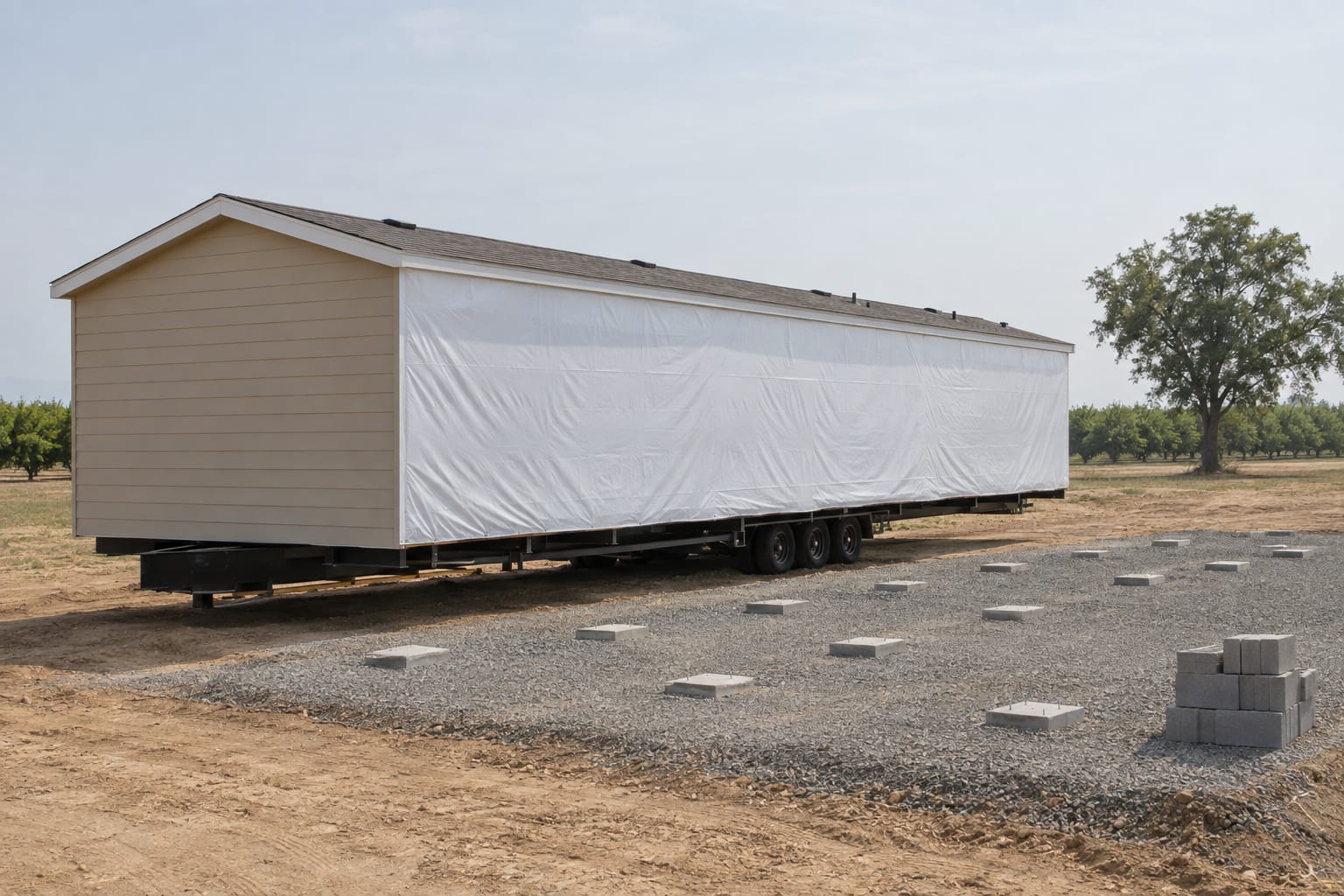
With a pre-owned home, the home is already installed where it stands. A new home has to be transported, set on its site, connected and finished, and dealers bundle those items differently. One quote may include delivery, installation, air conditioning, skirting and steps. Another may cover the home alone.
Ask for an itemized written quote, then check it against this list.
One-time costs before you move in
Go down the column that matches your plan and write a figure, or the name of the person who owes you one, beside each line.
One-time costs for a new home
| Cost | In a community | On your own land | Who gives you the figure |
|---|---|---|---|
| Down payment | Yes | Yes | You choose it, within program rules |
| Sales or use tax, registration and title fees | Yes | Yes | Dealer, escrow |
| Delivery and installation not in the price | Yes | Yes | Dealer or installer |
| Skirting, steps, awnings, carport | Often required by the community | Your choice, within local rules | Dealer, contractor |
| Permits and inspections | Yes | Yes, usually more of them | Dealer, building department |
| Site work: grading, foundation, driveway | Rarely, the space is already prepared | Yes | Site contractor |
| Utility connections: power, water, sewer or septic, gas or propane | Hookups are usually at the space | Yes | Utility companies, contractor |
| Application fee, deposit, first month’s space rent | Yes | No | Community office |
| Closing costs: escrow, appraisal, lender fees | Yes | Yes, plus land title costs | Lender, escrow |
| First insurance premium | Yes | Yes | Insurance quote |
| Moving, window coverings, yard | Yes | Yes | Your own estimate |
Three of these lines surprise buyers more often than the rest.
Site work on land with no homesite. On land that has never had a home on it, grading, the foundation and utilities are the hardest lines to estimate. Get contractor bids before you commit to the land, and ask about a well, a septic system or a propane tank if the lot has no public water, sewer or gas.
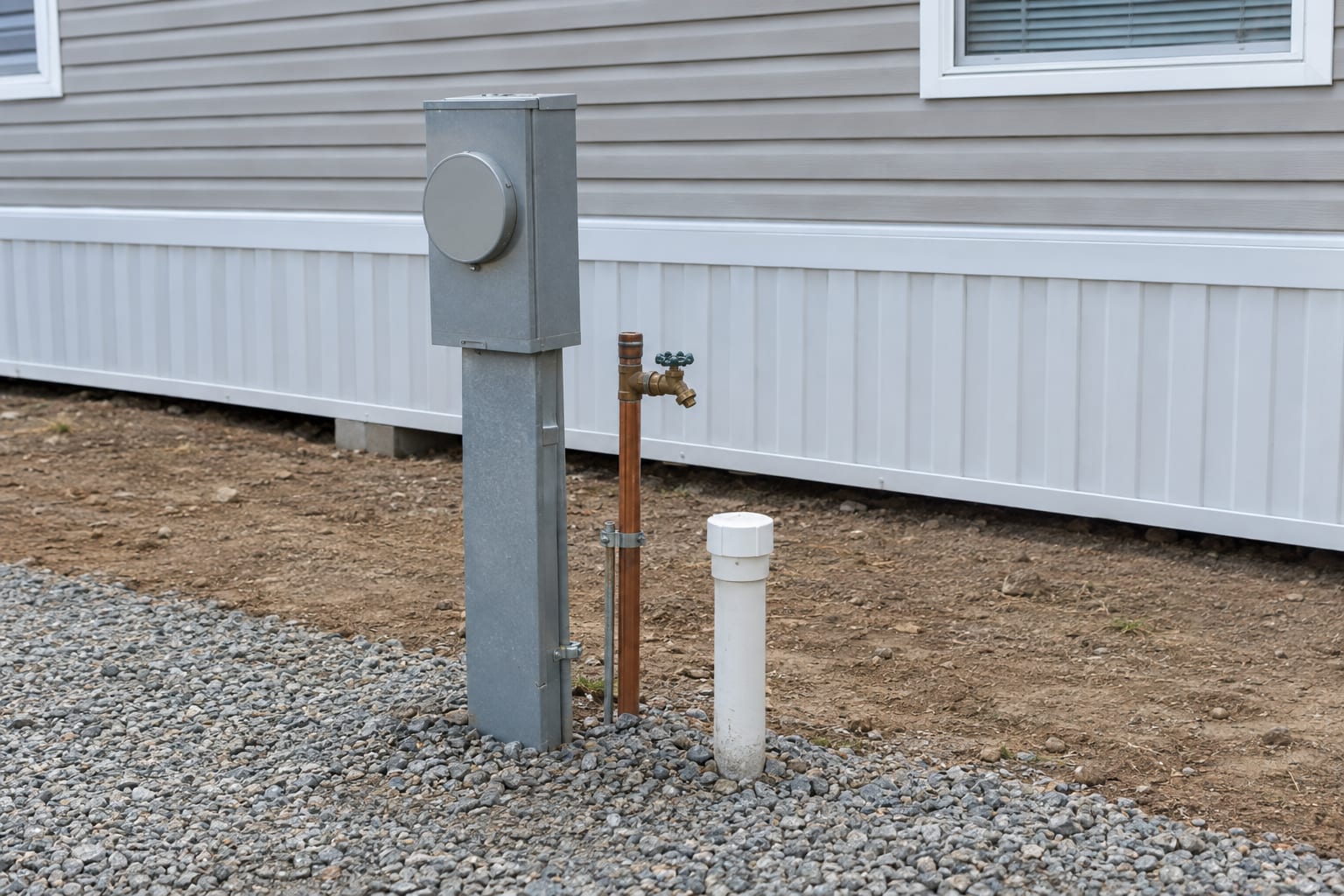
Permits. Installing a manufactured home generally needs a permit and an inspection. In California that comes from the local building department or from HCD, the Department of Housing and Community Development, depending on where the home is going; HCD’s manufactured home pages are the place to start. In Arizona, the Arizona Department of Housing handles installation and permit questions.
Community standards. A community may require particular skirting, awnings, steps or landscaping on a new home. Read its rules before you sign the dealer’s order, because those items belong in the quote.
Some one-time costs may be financed with the home and others have to be paid in cash, depending on the program. Ask before you sign. For a project that combines land, site work and a new home, land-and-home financing explains how the pieces fit together.
Monthly costs after you move in
Monthly costs worksheet
| Monthly line | In a community | On your own land | Where the number comes from |
|---|---|---|---|
| Loan payment | Home-only loan | Home and land together | Your lender, once you apply |
| Space rent | Yes | No | Community office, in writing |
| Property tax | On the home | On the home and the land | County assessor |
| Insurance | Yes | Yes | A quote on that home |
| Utilities | Some may be billed by the community | All yours, plus any well, septic or propane | Utility providers |
| Community or association fees | Sometimes | Sometimes | Community or association |
| Upkeep reserve | The home | The home and the land | Your own estimate |
The first four lines make up the total monthly housing cost, which is also what a lender looks at. How to calculate your monthly payment walks through estimating it with the payment calculator. For the insurance line, request a quote on the specific home through manufactured home insurance instead of guessing.
Taxes do not work the way they do for a site-built house. In California, a manufactured home sold new goes on the county’s property tax roll, sales or use tax generally applies when it is first sold, and a supplemental tax bill can follow a purchase. The State Board of Equalization’s manufactured home questions set out the rules.
In Arizona, the county assessor values the home and the county treasurer sends the tax bill. Whether the home is taxed on its own as personal property or together with the land depends on whether it has been affixed to land you own. Ask the assessor about the specific home. This is general information, not legal or tax advice.
Space rent is the line most likely to change after you move in. Ask the community for the current rent, what it includes and how it has changed, all in writing. How space rent affects what you can afford lists the questions.
If you are still choosing between the two, the long-term cost comparison of a community and owned land looks at how the columns diverge over the years.
Costs that do not arrive every month
A monthly budget hides the bills that come seasonally or once a year. Give each of these its own line.
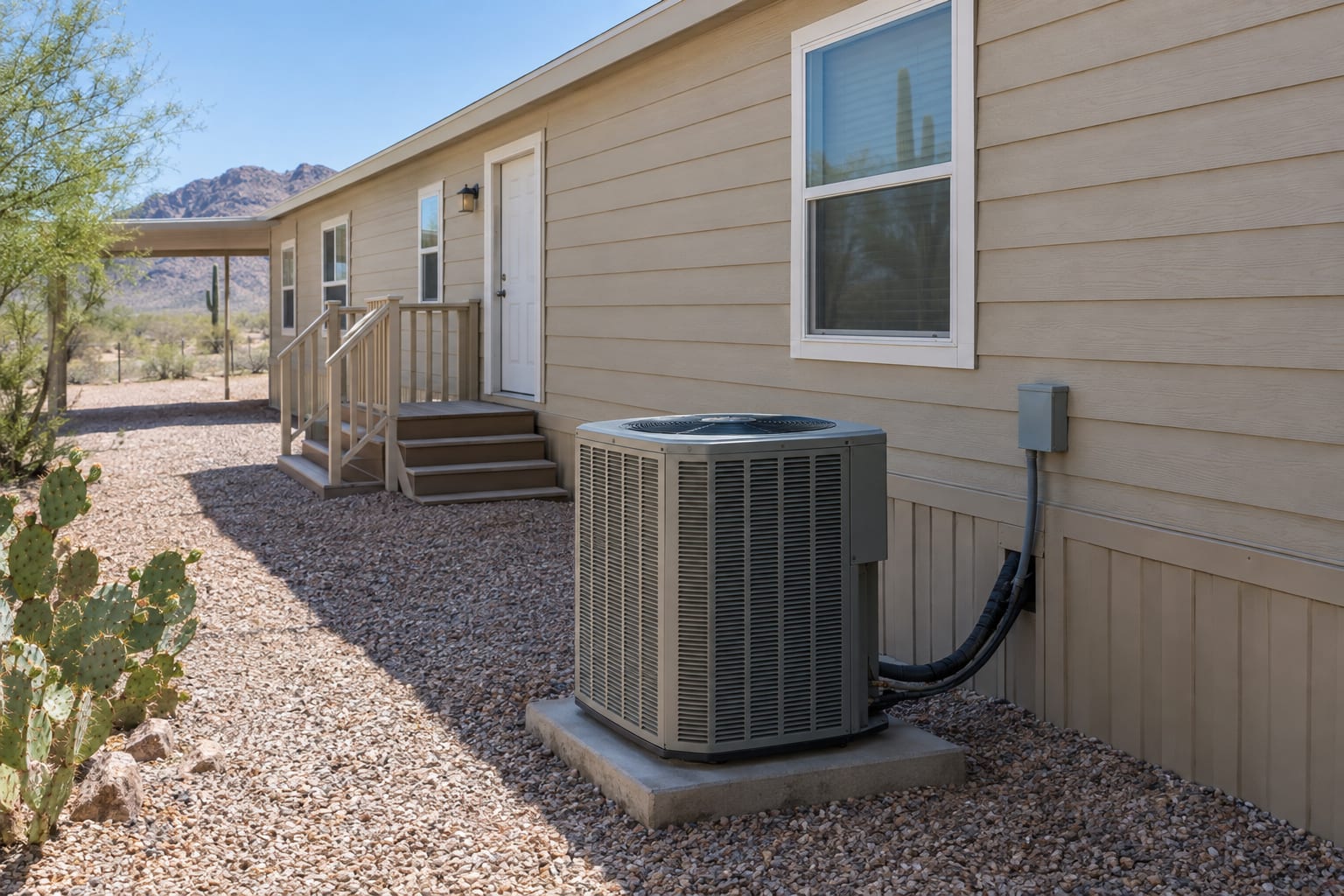
- Seasonal utilities. Cooling raises summer bills in the desert, and heating or propane raises winter ones in the high country. A new home has no billing history, so ask the community or a neighbor with a similar home what a summer month costs.
- Tax bills. Property tax is billed once or twice a year unless your lender collects it with the loan payment. Ask which applies to your loan.
- Insurance renewal. The premium is set for a year at a time and can change at renewal.
- Upkeep. A new home still needs filters, sealing around roof openings and skirting repairs, and a check of the home’s level if doors begin to stick.
Check the plan against your savings and your income
Start with cash. Subtract the one-time costs that have to be paid in cash and the reserve you want to keep, and what remains is available for the down payment and closing costs.
Then check income. Lenders compare your monthly housing cost (payment, taxes, insurance, and any space rent) with your gross monthly income, and acceptable ratios depend on the program, your other debts, and disposable income. Debt and housing ratios shows how to work out your own.
Come back to the worksheet once you have three documents: the dealer’s itemized quote, the community’s rent in writing or the contractor’s site bids, and an insurance quote on the home. Between them they replace most of the guesses.