New vs. Pre-Owned Manufactured Homes: How the Financing Differs
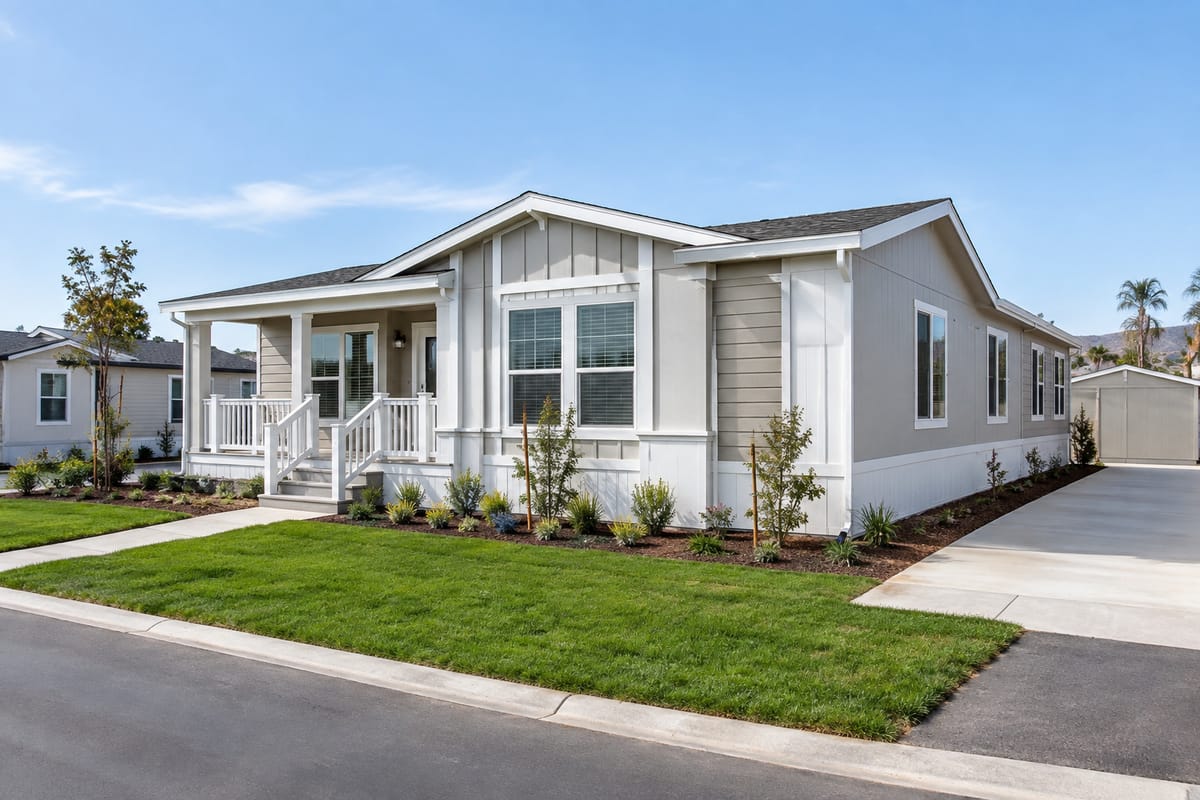
Neither a new nor a pre-owned manufactured home is the better bet for financing across the board. Both can be financed in California and Arizona, in a community or on owned land, and your credit and income are reviewed the same way for either. What differs is what gets asked about the home. A new home raises questions about delivery, installation and the full cost of the project. A pre-owned home raises questions about age, condition and title history.
So the useful comparison is which set of costs and unknowns suits you better, and that depends on your cash, where you want to live and when you need to move in.
New and pre-owned compared
What changes between a new and a pre-owned home
| What differs | New home | Pre-owned home |
|---|---|---|
| Price | Generally higher for a similar size | Generally lower; varies with age, condition and location |
| Where you find it | A dealer’s lot, a factory order, or a new home placed on a community space | A resale in a community or on land, through a dealer, an agent or the owner |
| Set-up | Delivery, installation, utility connections and inspection, unless already done | Already installed and connected |
| Condition | No wear, though you may be choosing from a floor plan or a model | Known after an inspection of the actual home |
| Paperwork | A dealer’s purchase agreement and a first title or registration | An existing title to transfer, and any seller’s loan to pay off |
| Warranty | Usually a manufacturer’s warranty for a stated period | Usually sold as it stands |
What a new home adds: delivery, set-up and a project to coordinate
The price on a dealer’s quote may not be the whole cost of living in the home. Ask for an itemized list, in writing, of what is and is not included: delivery, installation, skirting, steps, awnings or a carport, air conditioning, utility connections and permits.
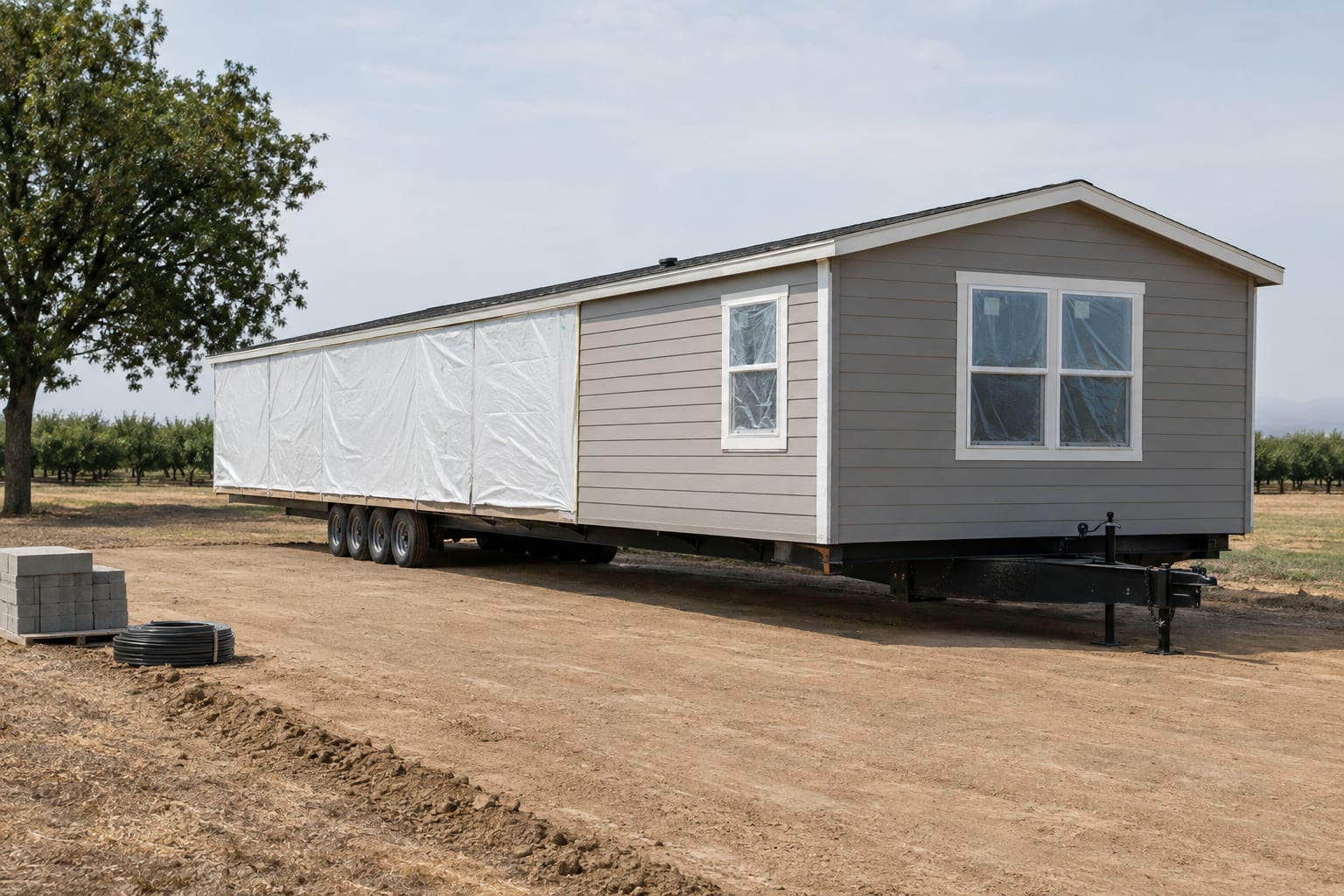
Where the home is going changes the size of the project:
- In a community. A space has to be available, and the community has its own say over what is placed on it. It also reviews you as a resident, and that approval is separate from the loan approval.
- On land. Site work, a foundation, utilities and permits join the file. This is a land-and-home financing project, with more parties and more steps than buying a home that is already in place.
Installation is regulated under state rules. For specifics, see HCD in California and the Arizona Department of Housing in Arizona. Timing depends on your transaction and the third parties involved: factory production, transport, site work and inspections all have to finish before move-in.
A new home does bring one protection a resale usually lacks. HUD notes that most manufacturers offer a warranty covering the structure and the factory-installed plumbing, heating and electrical systems for a stated period. Problems caused by installation are treated separately from the factory build, so ask who is responsible for what.
What a pre-owned home adds: age, condition and title history
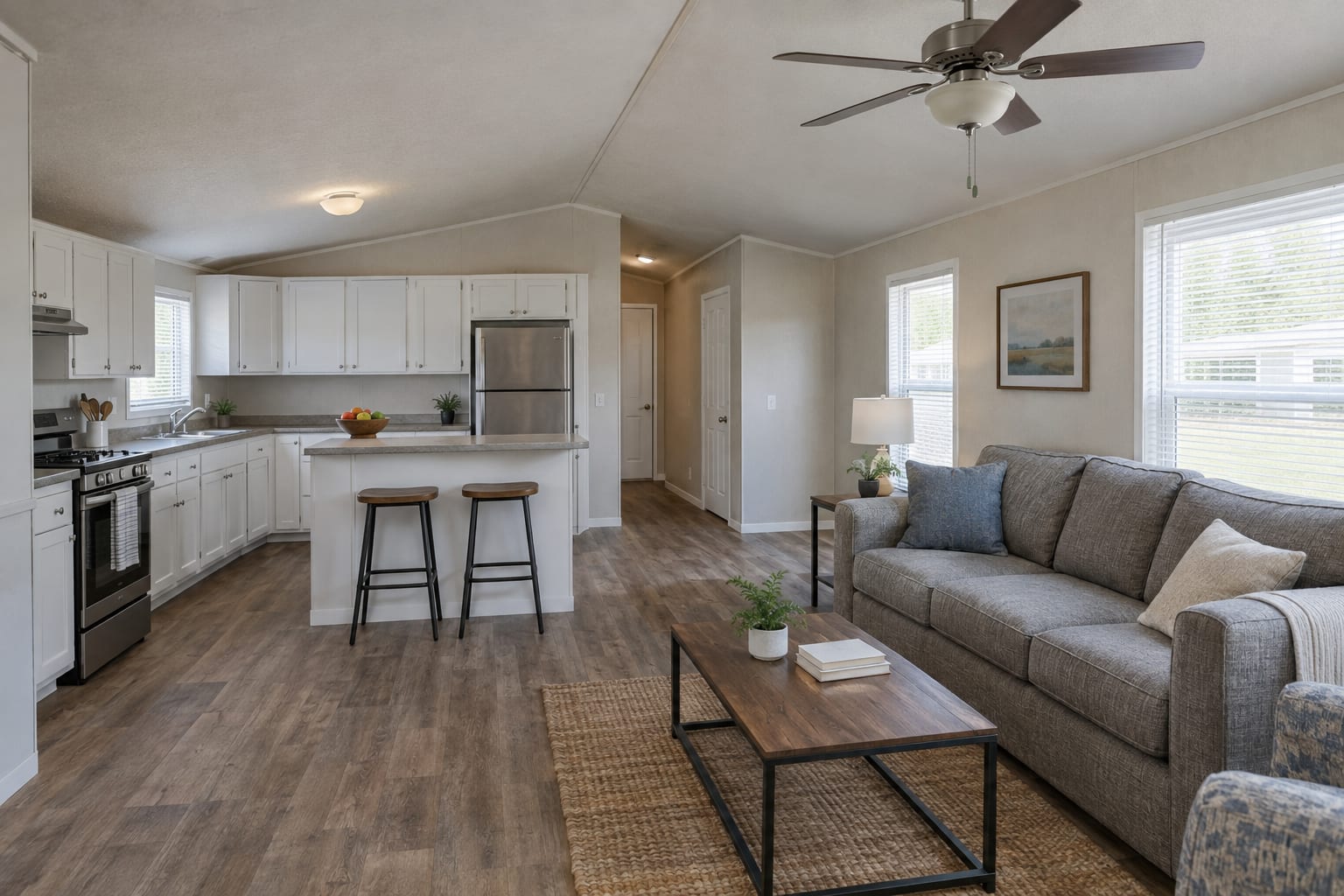
A pre-owned home is already installed, connected and standing where it will stay. You can walk through the actual rooms, look under the home, and see the community or the lot as it is. That removes the set-up questions and replaces them with questions about the home’s history.
Three areas get reviewed:
- Age and identity. The build date, HUD label and serial number have to check out against the title records. See how a pre-owned home is evaluated.
- Condition. An inspection tells you what needs repair. If the list is long, read fixer-upper vs. turnkey before you commit.
- Title. The seller needs a current title in their own name, and any loan on the home has to be paid off at closing. How much of that you handle yourself depends on the seller, as dealer vs. private-party purchases explains.
The price gap is not the whole budget
A lower price means a smaller amount to finance. It does not lower the space rent, which the community sets for the space, not from the home’s price, and insurance and taxes apply either way. And both choices need cash beyond the down payment: a new home for the set-up items left out of the quote, a pre-owned home for repairs.
To compare what each amount might cost per month with space rent included, use the payment calculator. Its results are educational estimates, not a loan offer.
Questions that settle it
If you are still touring, the before-you-shop checklist lists what to write down at each home so the two can be compared on the same facts.