Mobile Homes vs. Tiny Homes: Which Is Better for Affordable Living?

For living in full time, a manufactured home is usually the more practical of the two, because the law treats it as a house. It is built to a federal housing code, it can be lived in year-round in a community or on your own land, and there are established ways to title, insure and finance it.
A tiny home can cost less to buy, but “tiny home” is not a legal category. What you can do with one depends on what it was built as and where you want to put it. If your plan is a backyard unit, a seasonal place or a home you can tow, a tiny home may suit you better, provided the classification and the location both check out.
The two compared
Manufactured home compared with a tiny home
| Feature | Manufactured home | Tiny home |
|---|---|---|
| Size | Most are several times larger than a tiny home | Usually 400 square feet or less |
| Building standard | The federal HUD Code | Depends on how it was built |
| Year-round living | Yes, in a community or on a lot where zoning allows | Depends on its classification and local rules |
| Ownership record | A state title, or recorded as real property with the land | Follows its classification |
| Financing | Home-only and land-and-home loans are written for it | Different products and rules |
| Daily living | Full kitchen, bath, bedrooms, laundry hookups, closets | Compact, often with a sleeping loft |
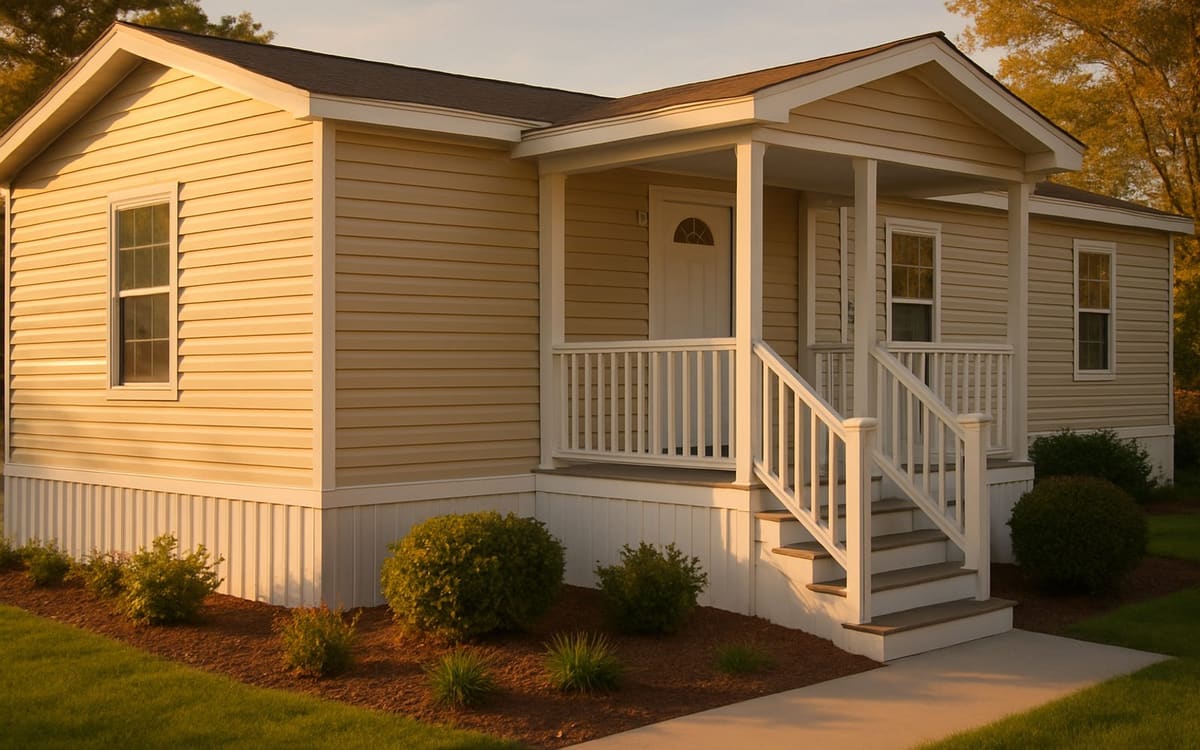
A manufactured home is a factory-built home constructed on or after June 15, 1976 to the federal HUD Code. A factory-built home from before that date is, technically, a mobile home, though in conversation people use both names for homes of any age. If the terms are new to you, start with what a manufactured home is and how it compares with a site-built house.
A tiny home has to qualify as something the law already recognizes
A manufactured home has a legal definition: built to the HUD Code on a permanent chassis, and meeting a federal size test, such as 320 square feet or more when set up. A tiny home has none. California’s Department of Housing and Community Development (HCD) addresses this in its Information Bulletin 2016-01 on tiny homes. To be occupied legally, a tiny home has to be approved as one of the kinds of structure the law already covers.
What a tiny home can be in California, according to HCD
| If it was built as | It is treated as | Where it can generally be lived in |
|---|---|---|
| A recreational vehicle or park trailer, on a chassis with wheels, 400 square feet or less | A recreational vehicle, for recreational or seasonal use | Mobilehome parks and special occupancy parks, unless a local ordinance allows more |
| A dwelling built to the California building code on a foundation | A house | A lot where zoning and permits allow it |
| Factory-built (modular) housing | A house, once installed on a foundation | A lot where zoning and permits allow it |
| A HUD-Code manufactured home | A manufactured home | A community space or a private lot |
| None of these | A nonconforming structure | It cannot legally be occupied |
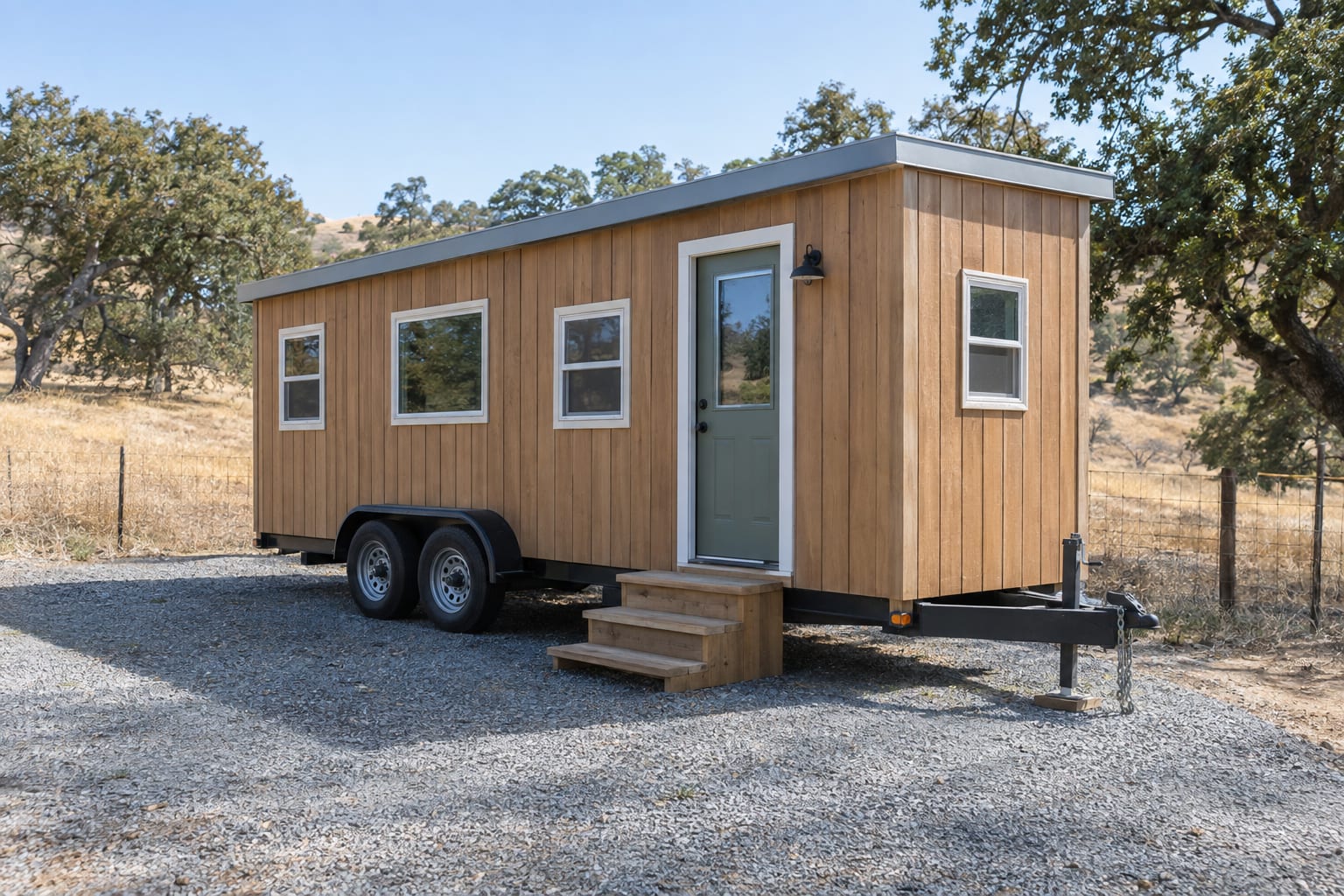
The first row is the one that surprises buyers. A tiny home on wheels is usually built as a recreational vehicle or a park trailer, and HCD describes both as temporary living quarters, not year-round dwellings. A city or county ordinance can allow more, so the planning department is the place to ask what applies to a specific lot.
In Arizona, ask the county or city planning department how a tiny home would be classified and where it may be placed before you buy one or the land for it. For manufactured homes, the Arizona Department of Housing’s manufactured housing office handles installation and permit questions.
How each one is owned and financed
A manufactured home has a settled paper trail. California titles and registers manufactured homes through HCD, not the DMV. Arizona titles are handled by the MVD, generally one title per section. On land you own, the home can be recorded as real property with the land.
Lenders that finance manufactured homes work with two kinds of loan. A home-only loan, also called a chattel loan, covers a home on a rented space. A land-and-home loan covers the home and the land together. All financing is subject to credit approval, and not every home or applicant qualifies.
A tiny home’s ownership and financing follow its classification. One built as a recreational vehicle or park trailer is not a manufactured home, and manufactured-home loan programs are not written for it. One built to the building code on a foundation is part of the real estate it sits on.
Santiago Financial, Inc. works only with manufactured and mobile homes in California and Arizona. If the home you are considering is a tiny home or a park model, say so at the start when you talk with a specialist, because financing for those follows different rules.
What each one costs to live in
A tiny home usually has the lower price, because there is much less of it. The price is only one line, though. Compare the whole monthly cost of each plan: the payment on whatever you borrow, the rent for the space or the cost of the land, insurance and utilities.
For a manufactured home in a community, space rent is paid on top of the loan payment. The payment calculator has a line for it. Its results are educational estimates, not a loan offer.
Space and daily living
The size difference is larger than the names suggest. A tiny home is usually 400 square feet or less. Most manufactured homes are several times that: new single-section homes averaged about 1,070 square feet in 2025, according to the U.S. Census Bureau’s Manufactured Housing Survey.
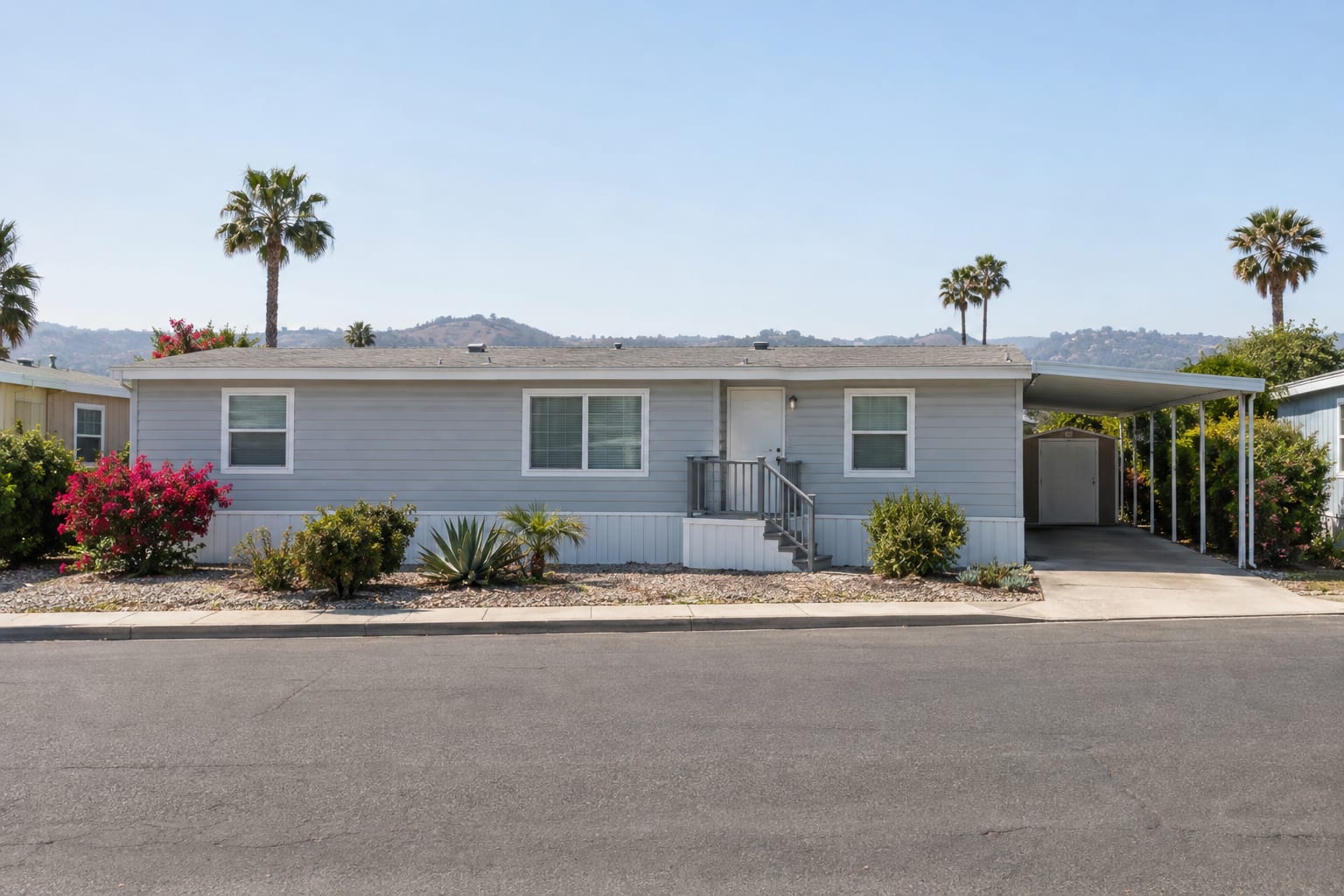
In practice, a manufactured home has full-height rooms on one level, a bedroom with a door, a full kitchen and bath, hookups for a washer and dryer, and closets. A tiny home gives those up for a lower price and a smaller footprint. Expect a sleeping loft reached by a ladder or steep stair, a compact kitchen and bath, and little storage.
That suits one person or a couple who own little. It is harder with children, pets, limited mobility or a job done from home. If you are deciding how much room you need, single-section or multi-section compares the two sizes of manufactured home.
Which one fits which plan
| Your plan | What usually fits |
|---|---|
| Living year-round in an established community | A manufactured home |
| A house on your own lot | A manufactured home on a foundation, or a tiny home built to the building code, where zoning allows |
| A second unit behind an existing house | Ask the city what its accessory dwelling rules allow |
| Seasonal or recreational use, or a home you can tow | A tiny home on wheels or a park model |
| Room for a family, pets or a home office | A manufactured home |
Selling later follows the same logic. A manufactured home in a community is sold where it sits, to a buyer the community approves. A tiny home’s buyer needs a legal place to put it. Neither comes with a promise about value: that depends on condition, location and, in a community, the space rent a buyer would take on.
This is general information, not legal advice. Confirm how a specific unit is classified, and where it may be placed, with the state housing agency and the planning department where it will sit.