Manufactured Home Loans in Tucson, Arizona: Buyer Guide
Local financing details: Mobile Home Loans in Tucson
Buying a manufactured home in Tucson comes down to three things the listing photos rarely show: how the home is cooled and how its roof has held up to the sun, whether it sits on a rented space or on land, and what summer storms do to that particular piece of ground. Each one changes what you inspect, what you budget for each month, and which records a lender will ask for.
For how purchase and refinance loans themselves work here, see manufactured home loans in Tucson.
What the desert does to a manufactured home
Average afternoon highs at Tucson International Airport are close to 100°F in June and July, according to the Western Regional Climate Center’s station record, and about half of the year’s rain arrives in July, August and September. The National Weather Service counts June 15 through September 30 as monsoon season, when thunderstorms bring strong winds, hail, dust and flash flooding.
So a Tucson home gets months of intense sun and then sudden wind and rain. The sun dries out roof coatings, sealant and window seals. The storms then test every one of them.
Desert-climate checks when you tour a Tucson home
| What to look at | Why it matters here | What to ask or check |
|---|---|---|
| Roof | Sun breaks down coatings and sealant, and monsoon rain finds the gaps | When it was last recoated or replaced; stains on ceilings and around vents |
| Cooling system | It runs for much of the year | Evaporative, refrigerated or both; age; last service |
| Sun-facing windows | Afternoon sun on west-facing glass adds to the cooling load | Awnings, sun screens, dual-pane glass |
| Carport and awnings | Thunderstorm gusts pull at anything attached to the home | Posts set firmly; no loose or sagging panels |
| Skirting and the ground under the home | Runoff can wash soil away from the supports | Missing panels; signs that water has moved under the home |
| Data plate | It lists the zones the home was built for | Photograph it; it is usually inside a kitchen cabinet or a closet |
Many older manufactured homes have a metal or low-slope roof protected by a white coating that reflects heat and seals the seams. The coating wears in the sun and has to be renewed from time to time. Ask the seller when it was last done and by whom, and look at the ceilings for stains before you look at anything else.
Evaporative cooling, refrigerated air, or both
Tucson homes are cooled in one of two ways, and many have both.
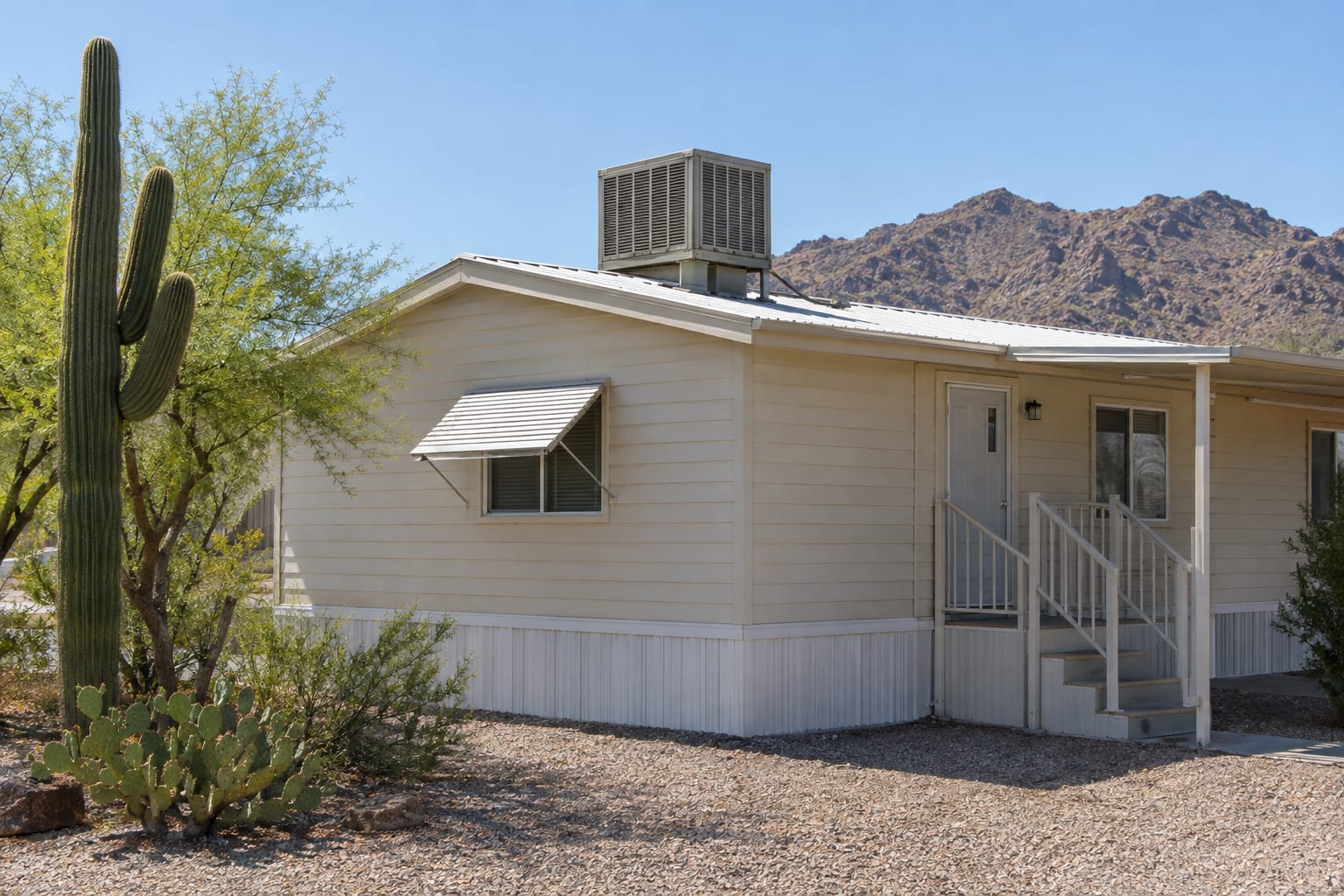
An evaporative cooler, often called a swamp cooler, pulls outside air through wet pads, and the evaporating water cools the air. It generally uses less electricity than refrigerated air conditioning. It also uses water, needs its pads and pump serviced each season, and depends on dry air. In May and June it works well. Once monsoon humidity arrives, it cools far less.
Refrigerated air, meaning a conventional air conditioner or heat pump, works in any humidity and costs more to run.
Three questions settle most of it:
- Which system does the home have, and how old is each unit?
- If a cooler sits on the roof, has it leaked? Check the roof and the ceiling around it.
- Can the seller show a full year of electric bills? That puts summer cooling in your budget as a real figure.
The summer heat checklist covers filters, ducts, sealing and shade in more detail. Roof condition and working cooling matter beyond comfort: an appraiser notes the home’s condition, and an insurance agent may ask how old the roof is.
Community space or your own lot
Tucson has both arrangements, and they are different purchases.
In a land-lease community you own the home and rent the space it sits on. Space rent is paid every month on top of any loan payment. The community has its own rules and approves new residents itself. That approval is separate from loan approval, and you need both.
Communities are either age-restricted, usually 55 and older, or open to all ages. Ask for the age policy in writing before you tour, because it decides whether your household can live there at all.
A home on land you own has no space rent. Instead you pay property taxes, and the water supply, the septic system if there is one, and the driveway are yours to maintain.
The two are also recorded differently. In Arizona a manufactured home that is not affixed to land is titled by the MVD, the Motor Vehicle Division of the Arizona Department of Transportation, with one title per section, as ADOT’s mobile home ownership page describes. When the owner of the land also owns the home, the titles can be surrendered and an Affidavit of Affixture recorded with the county recorder, which makes the home part of the real estate. Current MVD and county procedures should be confirmed.
Land outside the city limits
Much of the land around Tucson is unincorporated Pima County, including Picture Rocks, Three Points, Vail and Catalina. There the county, not a city, handles permits, and a parcel is more likely to have its own well, septic system and unpaved road.
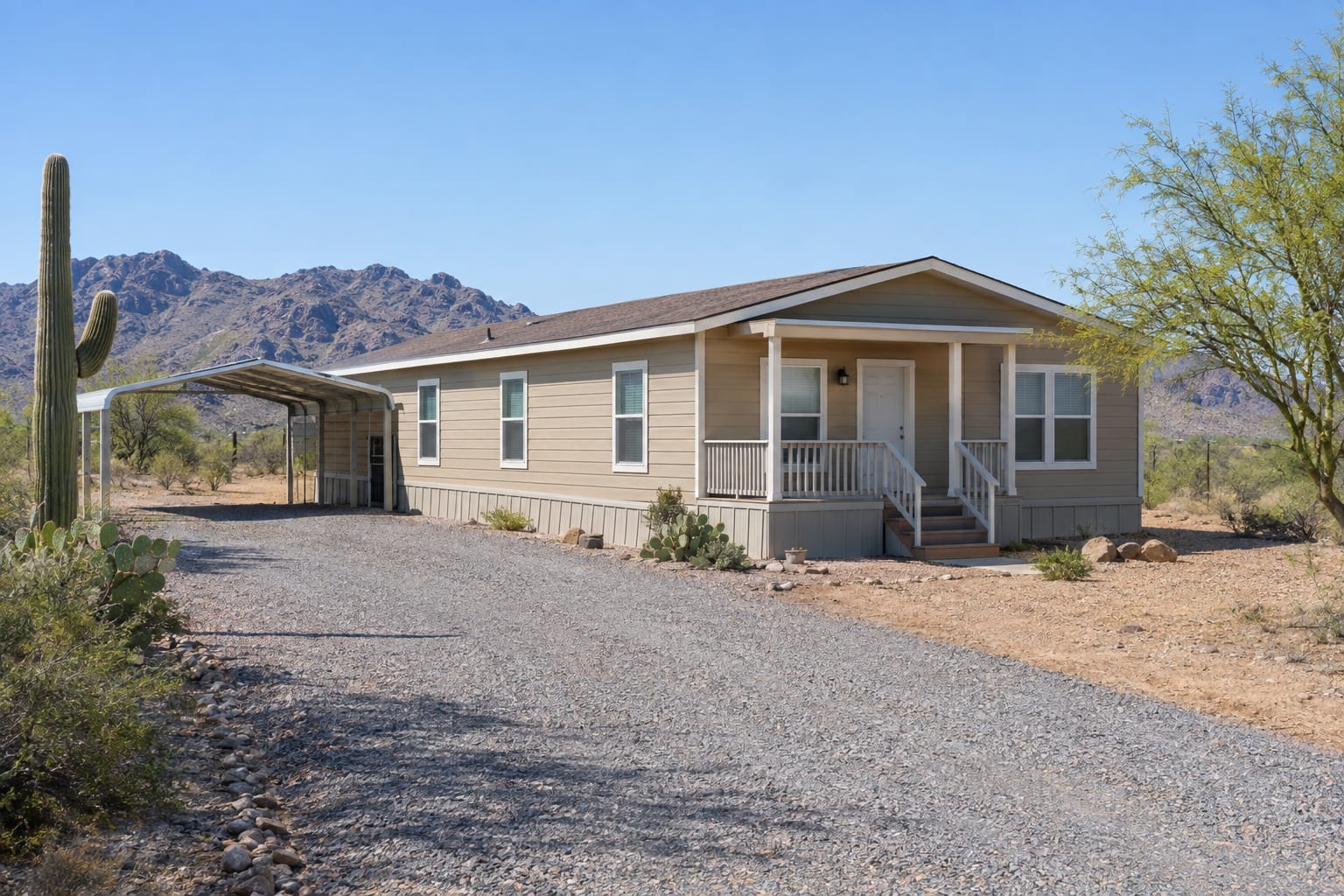
If a home is being placed on a parcel or moved to one, Pima County’s manufactured homes page says two permits are needed. The county issues a building permit for the electric service and the sewer or septic connection. The state issues the installation permit for placing the home, through the Arizona Department of Housing. The county also says a home built before June 15, 1976 needs a state rehabilitation certification before it is installed or moved.
Arizona’s rules call for a septic system to be inspected before a property changes hands and for the buyer to file a Notice of Transfer afterward. Pima County handles septic permits and transfers through its on-site wastewater program.
Washes, monsoon storms and insurance
For most of the year a Tucson wash is a dry, sandy channel. In a summer storm it can carry a lot of water with little warning. A lot beside a wash, or in a low spot, can be in a mapped flood hazard area even though it has never looked wet on the days you visited.
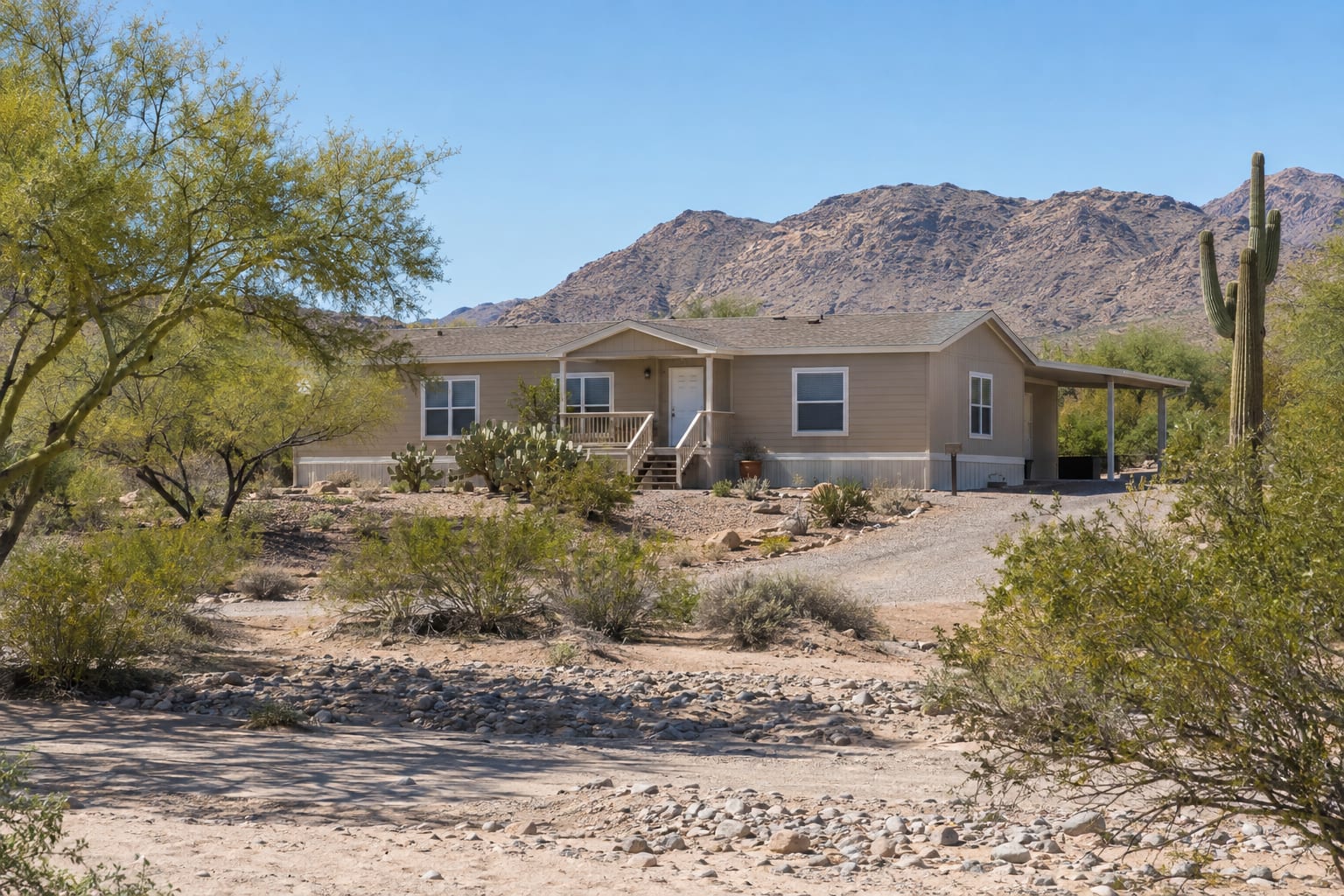
Two free checks are worth making before you make an offer:
- The Pima County Regional Flood Control District takes requests for flood hazard information on a specific property, including how a manufactured home there would need to be elevated.
- FEMA’s Flood Map Service Center shows the official flood map for any address.
FEMA notes that most homeowners insurance does not cover flood damage, so flood coverage is a separate policy, and a lender may require it for a home in a mapped flood hazard area. Wind and hail are a question for the home policy itself.
Get insurance quotes for the specific address early, since the premium is part of the monthly housing cost a lender compares with your income. You can request a manufactured home insurance quote for an Arizona home through this site.
Green Valley and the towns around Tucson
Green Valley, south of Tucson along Interstate 19, is unincorporated, so Pima County handles permits there. Many of its neighborhoods are age-restricted. Ask for the age policy, and ask whether there is a homeowners association and what its dues cover, since dues belong in the monthly budget next to space rent or property taxes. Financing details are on the Green Valley page.
Marana, Oro Valley and Sahuarita are incorporated towns, as Tucson is a city, and each has its own offices. Wherever the home is, the first call about a permit goes to the jurisdiction the parcel sits in.
This is general information, not legal, tax or insurance advice. County and state procedures change, so confirm them with the offices linked above.