Manufactured Home Loans in Mesa, Arizona: Buyer Guide

Local financing details: Mobile Home Loans in Mesa
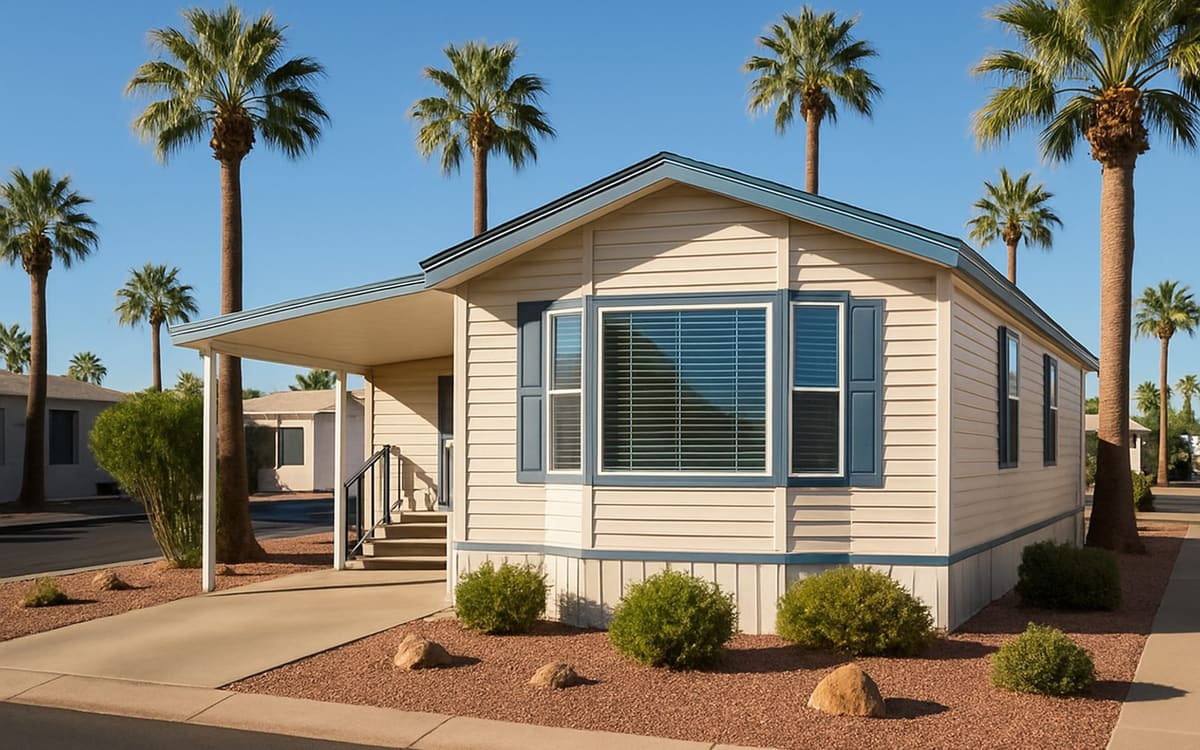
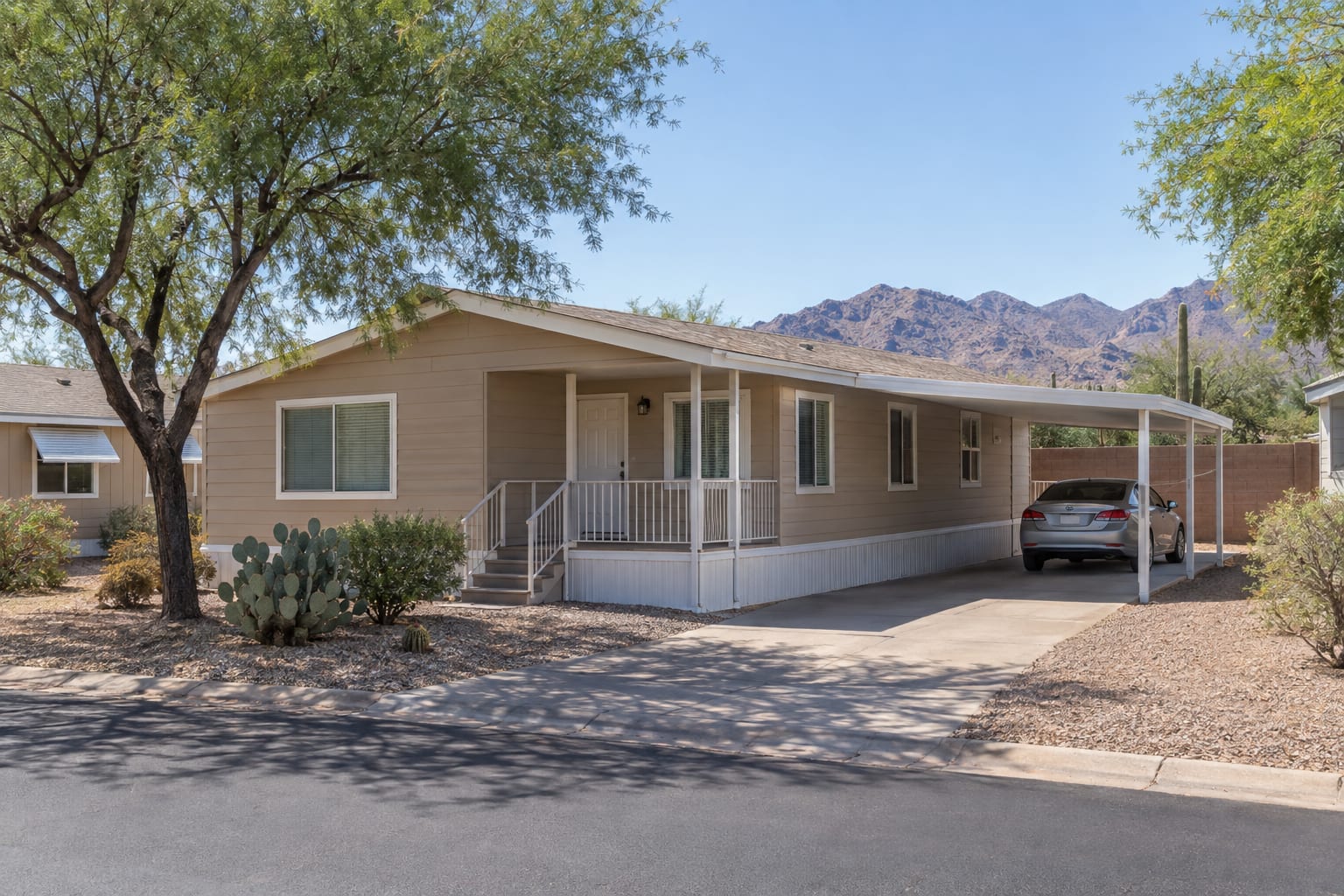
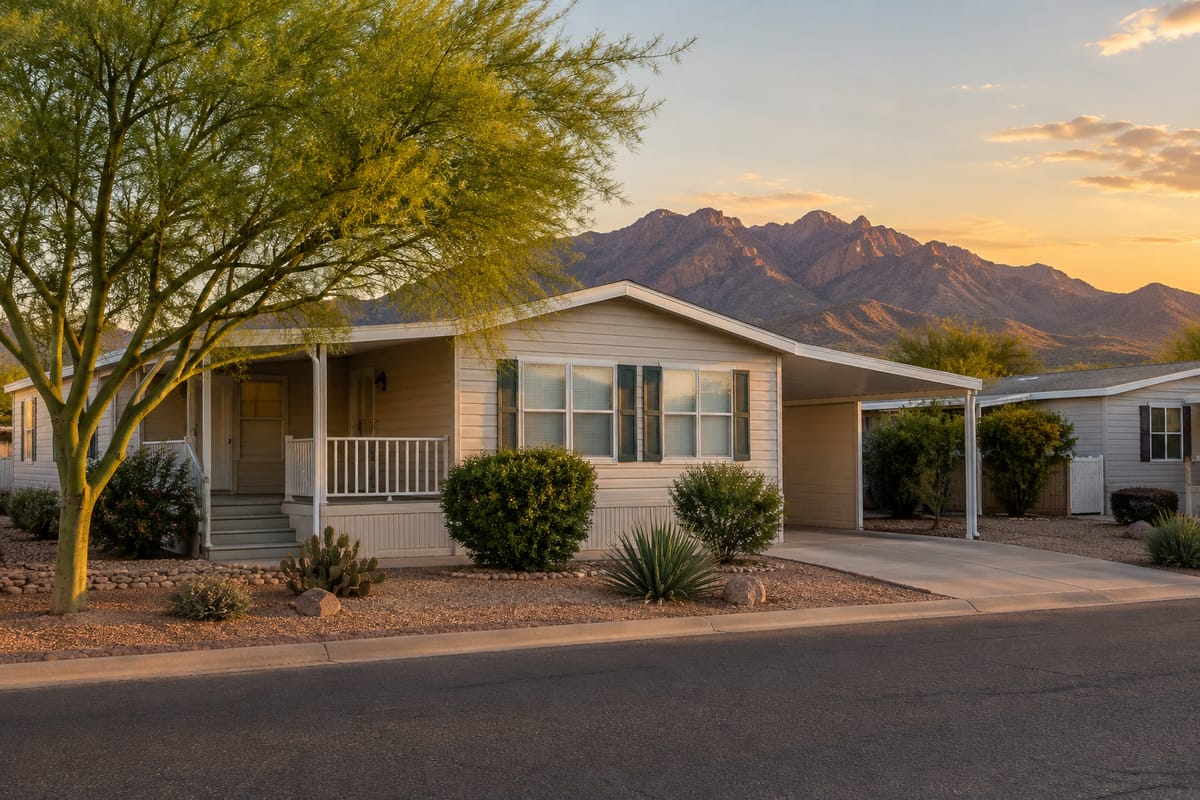
Buying a manufactured home in Mesa is mostly a matter of choosing the community, because Mesa has far more manufactured housing than its East Valley neighbors. The U.S. Census Bureau’s 2020 to 2024 estimates count about 27,800 mobile homes in the city, roughly one housing unit in eight. (“Mobile home” is the category the survey uses for manufactured homes.)
Three questions sort that much choice. Is the community age-qualified (55+) or open to all ages? Is it a manufactured home community or an RV resort that sells park models? Would you rent the space or own the lot? Each answer changes who can live in the home, what you pay each month and how the home is financed. The financing itself is covered on our page about manufactured home loans in Mesa.
A Mesa listing can be one of three setups
Before you drive out to see a home, ask which of these it is. They are three different purchases.
Three ways a factory-built home is sold in Mesa
| Setup | What you own | What you pay besides a loan | Financing |
|---|---|---|---|
| Land-lease community, 55+ or all-age | The manufactured home | Space rent, utilities, insurance | A home-only (chattel) loan, which finances the home without land |
| RV resort with park models | A park model on a rented site | Site rent, utilities, insurance | Different rules from manufactured homes; ask first |
| Owned lot in a subdivision | The home and the lot | Property taxes, insurance, any association dues | Home and land together, if the home is recorded as real property |
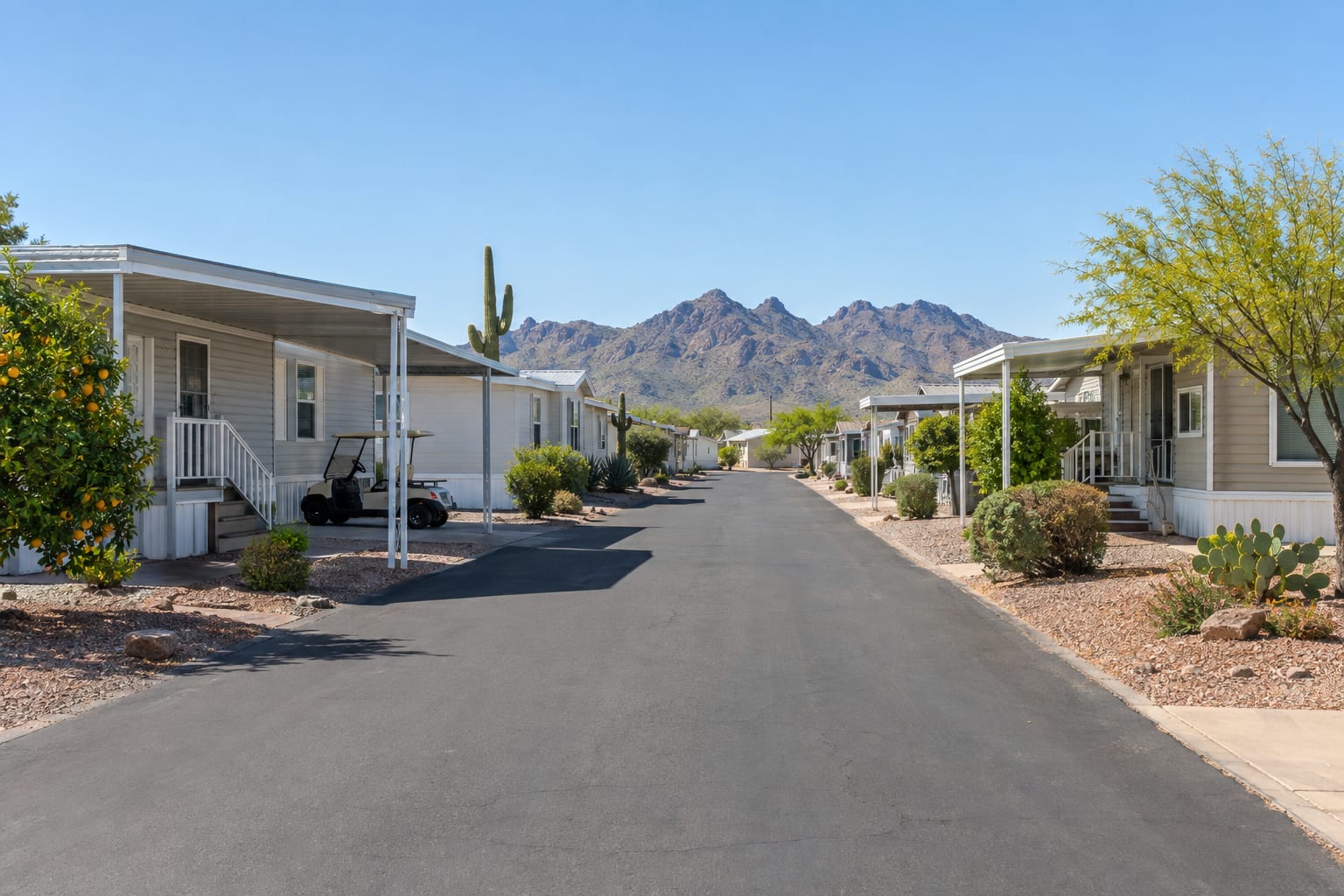
In a land-lease community the community owns the land, the streets and the shared areas; you own the home and rent the space under it.
In a 55+ community, the written age policy decides who can live there
Much of Mesa’s manufactured housing is in age-qualified communities, usually described as 55+. The federal Fair Housing Act lets a community operate as senior housing when it meets the standards of the Housing for Older Persons Act, as the U.S. Department of Justice explains on its Fair Housing Act page. What that means for your household is in each community’s own written policy, and the policies are not all the same.
What differs between a 55+ community and an all-age one
| Question | Age-qualified (55+) | All-age |
|---|---|---|
| Who may live in the home | Set by the age policy: who must be the qualifying age, and what applies to a younger spouse, adult child or caregiver | No age rule; occupancy limits in the rules still apply |
| Guests and grandchildren | Limits on length of stay are common | Ordinary guest rules |
| Who can buy the home from you later | Only buyers the age policy admits | Any buyer the community approves |
The last row is the one buyers overlook. The age policy that applies to you today also applies to whoever you sell to.
Age is only one of the rules worth reading before you commit. How park rules can affect your purchase covers the others that change buyers’ plans, such as pets, renting the home out and exterior changes.
A park model in an RV resort is a different purchase
Some homes advertised in Mesa’s 55+ resorts are park models, not manufactured homes. A park model is a small recreational unit, typically 400 square feet or less, built to a recreational-vehicle standard and not to the federal HUD Code that governs manufactured homes. Many have an added room, an awning and a settled look, so a listing photo will not tell you which one you are looking at.
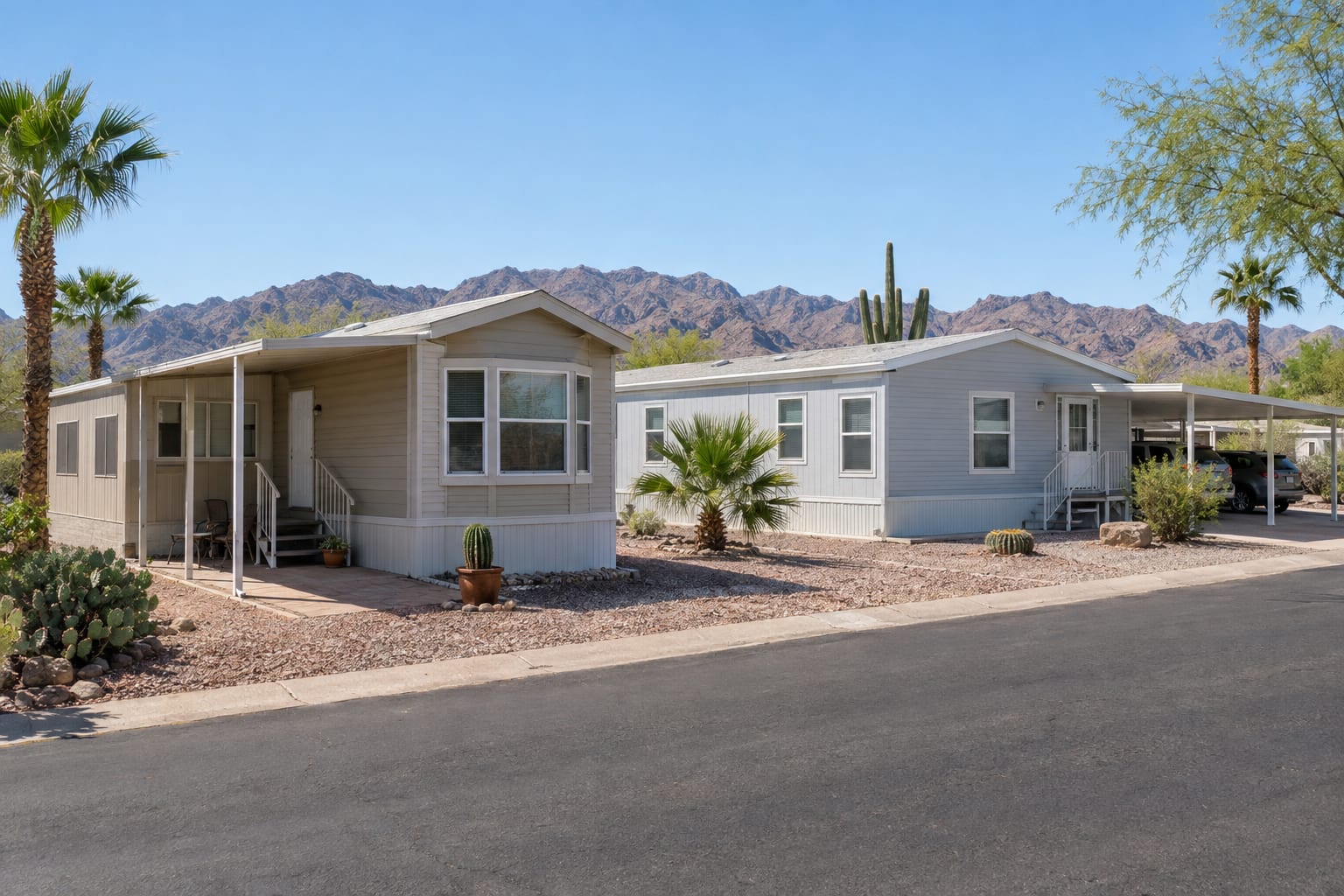
The difference matters because park models are a separate product class, and financing for them follows different rules. To check, look for a HUD label, the small metal plate on the outside end wall of each section, and the data plate inside the home. A manufactured home, built on or after June 15, 1976, has both. If the unit is a park model, say so in your first conversation with a lender.
Some communities change with the seasons
Some Mesa communities have many seasonal residents who are there from fall to spring. If you are looking at one of those, a winter visit shows you the community at its busiest, and it is worth finding out what the rest of the year looks like:
- Ask how many homes are occupied all year, and which amenities and office hours continue through the summer.
- Ask the seller for a year of electric bills. The summer months show what cooling this particular home costs, which depends on its age, insulation and air conditioning.
- Ask what resident approval requires of you in person if you are buying from another state, and when you can submit the application.
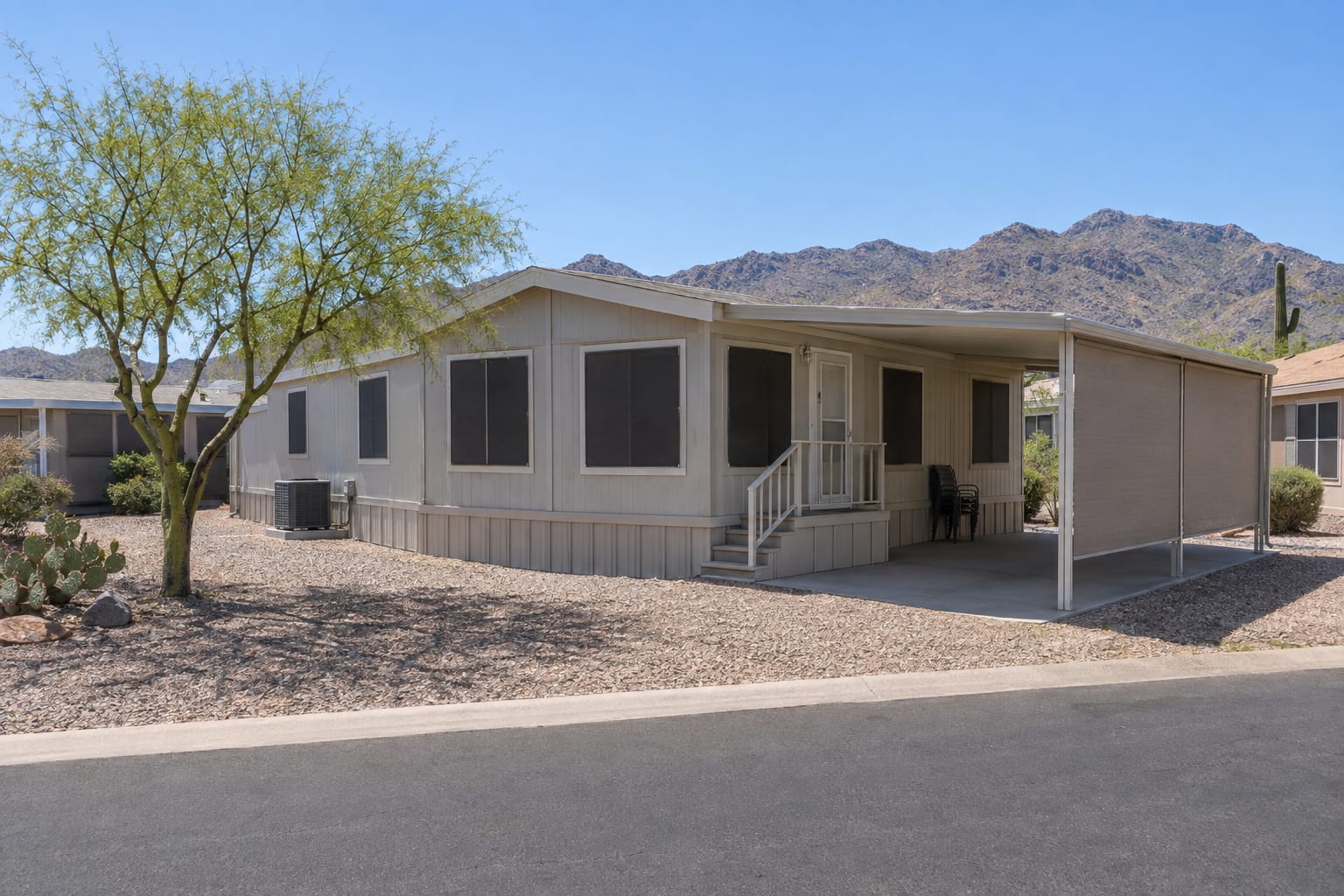
If the home will be a seasonal residence and not your primary one, tell the lender at the start. Many programs require owner-occupancy, so ask whether financing is available for your intended use before you buy. Buying a manufactured home as a snowbird goes into insurance and upkeep for a home that sits empty part of the year.
Questions to take on a community visit
Two notes on the last two questions. Community approval and loan approval are separate reviews, and passing one does not settle the other, so start both early. And Arizona titles are handled by the MVD (the ADOT Motor Vehicle Division), generally one title per section, as described on its mobile home ownership page. A double-wide normally has two.
Compare communities on the whole monthly cost
Two similar homes in two Mesa communities can cost quite different amounts each month, because space rent and what it includes differ from one community to the next. For every home you are serious about, add the estimated loan payment, the space rent, utilities and insurance, using rent figures you have in writing. A lender looks at the same total. How space rent affects what you can afford shows how to set two communities side by side.
Santiago Financial, Inc. serves manufactured home buyers across Arizona. There is no single down payment, rate or term: each depends on the program, your credit, the home, and whether the land is leased or owned, and all financing is subject to credit approval. If Chandler or Gilbert is also on your list, expect far fewer homes there. What buyers should know about Chandler and Gilbert explains why and where else to look.