Manufactured Home Financing for Dealers: How to Help Buyers Get Prepared
The two most useful things a dealership can do for a financed sale are to send the buyer to the lender before a home is ordered, and to put the whole project on the purchase order: the home, the options, delivery, set-up and anything paid on the buyer’s behalf. A lender reviews the buyer, the home, its value and where it will sit. Your paperwork supplies most of what it knows about the last three.
The details change with where the home is going. A rented space in a community brings the community’s own review of the buyer. The buyer’s own land turns the sale into a larger project with site work in it.
Refer the buyer before a home is ordered
A buyer who chooses a floor plan first and asks about financing second has already settled on a price. If the loan review supports a smaller amount, the sale starts over with a disappointed buyer.
Pre-qualification is an early read on what price range may be realistic, based on what the buyer tells the lender. It is not a loan approval, and it helps to say so in those words. With a range in hand, you can show the homes and option packages that fit it. Not every applicant or home qualifies, and an early referral is how a buyer finds out where they stand before a home is on order.
To send a buyer to Santiago Financial, Inc., follow the steps under how to refer a client on our page for dealers and agents. With the buyer’s permission, include their name and phone number, the home or floor plan, the price, and whether the home is going onto leased or owned land. Leave Social Security numbers, birth dates and bank details out of the referral. The buyer gives those on the application. We finance homes located in California and Arizona only.
What to say about financing, and what to leave to the lender
Buyers ask the salesperson first, because the salesperson is in the room. A fair answer keeps the buyer informed without promising something only a lender can decide.
Financing questions on the sales floor
| The buyer asks | A fair answer | Leave to the lender |
|---|---|---|
| What will my payment be? | The payment calculator on this site gives an educational estimate, space rent included | A payment figure |
| How much do I need down? | It depends on the program, your credit, the home and the land | A percentage or an amount |
| What rate will I get? | It depends on the program, your credit, the home and the loan amount | A rate, or a comparison between lenders |
| Will I be approved? | Each application is reviewed individually, subject to credit approval | Any prediction |
| When can I move in? | It depends on the build, set-up, the community and the loan conditions | A closing or funding date |
The same care applies to quote sheets and advertising. If a buyer needs a figure, it should come from the lender, in writing, for that buyer’s application.
What the lender needs from the dealership
The buyer supplies income, asset and identification documents. Most of the rest of the file comes from you, starting with the purchase order.
In California, a dealer sale already runs through escrow under state law, and on a new home the manufacturer’s certificate of origin goes into that escrow too (Health and Safety Code section 18035). Tell the loan processor which escrow company you use. This is general information, not legal advice.
The retailer disclosure covers what the purchase order may not show
With a home-only (chattel) loan request, the lender also asks the dealership for a signed Retailer Disclosure and Certification. The version listed with the loan processing forms on our printable forms page asks for three things:
- any trade-in, with its description and the allowance given;
- any money given to the buyer or paid on the buyer’s behalf, by the dealership or by anyone else. Property improvements, closing costs and payments to a community or a landowner count. Set-up cost does not;
- the home-site arrangement: who owns the land and what the buyer pays for the site.
Where the home is going changes the file
The same floor plan produces a different loan file depending on the land under it.
Three destinations for a new home
| Where the home will sit | What the lender needs to see | What to start early |
|---|---|---|
| A rented space in a community | The community’s approval of the buyer, the space rent and the lease term | The resident application, and the community’s standards for homes it accepts |
| Land the buyer owns or is buying | The land’s title, plus the site work, utilities and foundation in the project | One budget for the whole project, including other contractors’ work |
| A relative’s land | Who owns the land, and what the buyer pays to keep the home there | Asking the lender what it needs from the landowner |
A community’s approval of the buyer is a separate review from the loan, with its own application, and a closing needs both. Have the buyer pick up the resident application when the space is reserved. What the lender then asks the office to confirm is set out in the guide for park managers.
On the buyer’s own land, grading, utility connections, a foundation and permits can all be part of what is financed. That is land-and-home financing, and the lender needs the full budget before it can review the loan amount.
Plan delivery and set-up around the loan
A new home has stages that a resale does not: the factory build, transport, installation, utility connections and the inspection of the installation. The loan has stages of its own, and each schedule depends on the other.
A new-home sale, and what the dealership does at each stage
- Before showing homes Refer the buyer, so they arrive with an early read on price range. Find out whether the home is going to a community, the buyer’s land or a relative’s land.
- At the order Put the whole project on the purchase order and complete the retailer disclosure. The deposit is placed as the contract and state law require, and the buyer completes the loan application.
- While the loan is reviewed An approval comes with a list of conditions, and some are yours: the purchase order, the disclosure, the home’s identification. For a community, the buyer submits the resident application and the space rent is confirmed in writing.
- Before delivery Ask the loan processor which set-up milestones have to be finished before the loan can fund, and plan the delivery date around the answer.
- After delivery and set-up Send the serial and HUD label numbers and the installer’s details. The buyer arranges a homeowners policy.
- Signing and funding The buyer signs loan documents through escrow, and the loan funds once every condition is cleared.
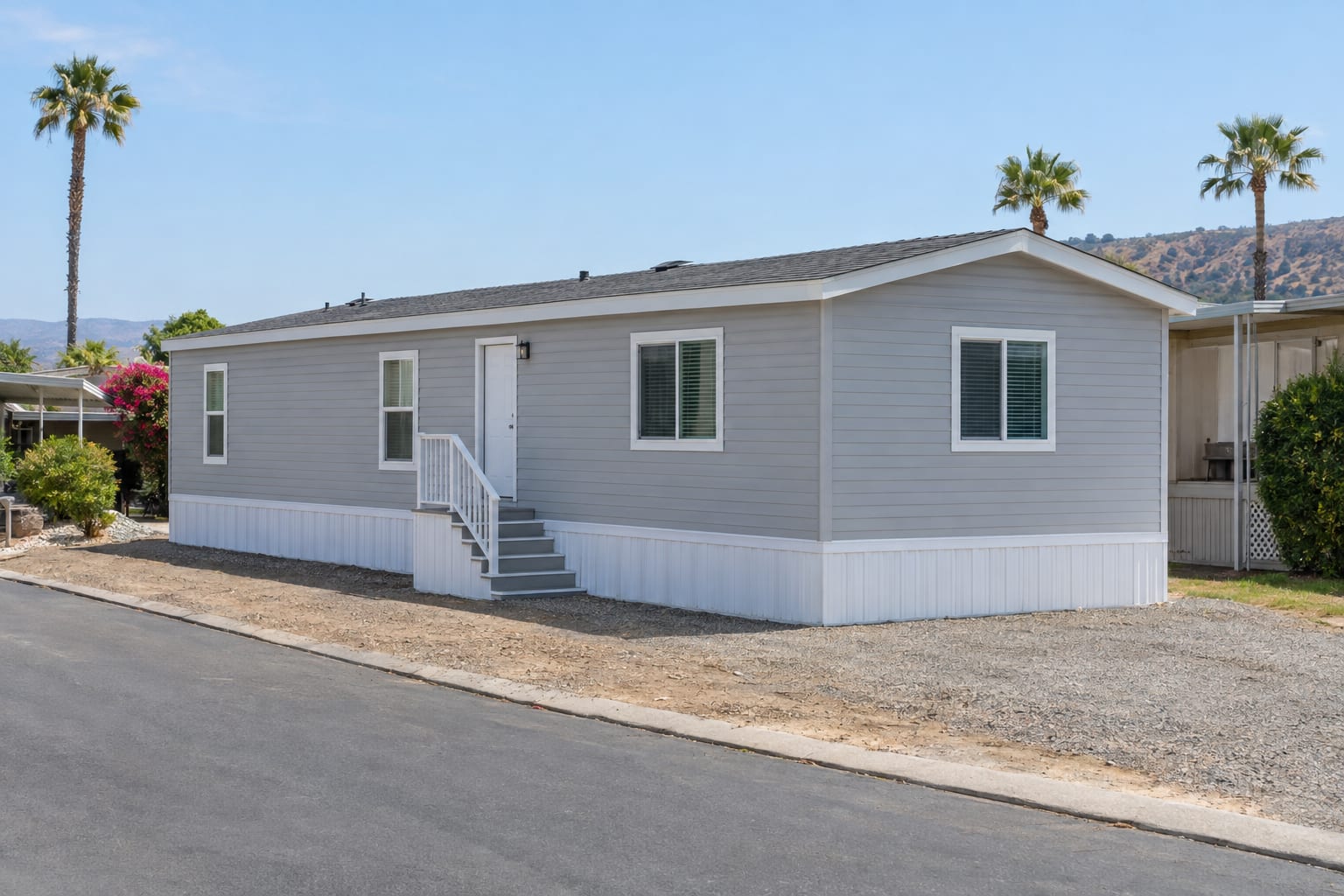
At any stage, report a change to the price, the options, the trade-in or an incentive when it happens. Timing depends on the transaction and the third parties involved, so a move-in date promised at the order desk is a promise about other people’s schedules.
A pre-owned home trades the delivery questions for title questions
A pre-owned home on your lot, or one you are selling for its owner, skips the build and the delivery but comes with a title history. The seller’s title, the names on it and any lien are verified as on any resale, which is the subject of the guide for real estate agents.