What Real Estate Agents Should Know About Manufactured Home Financing
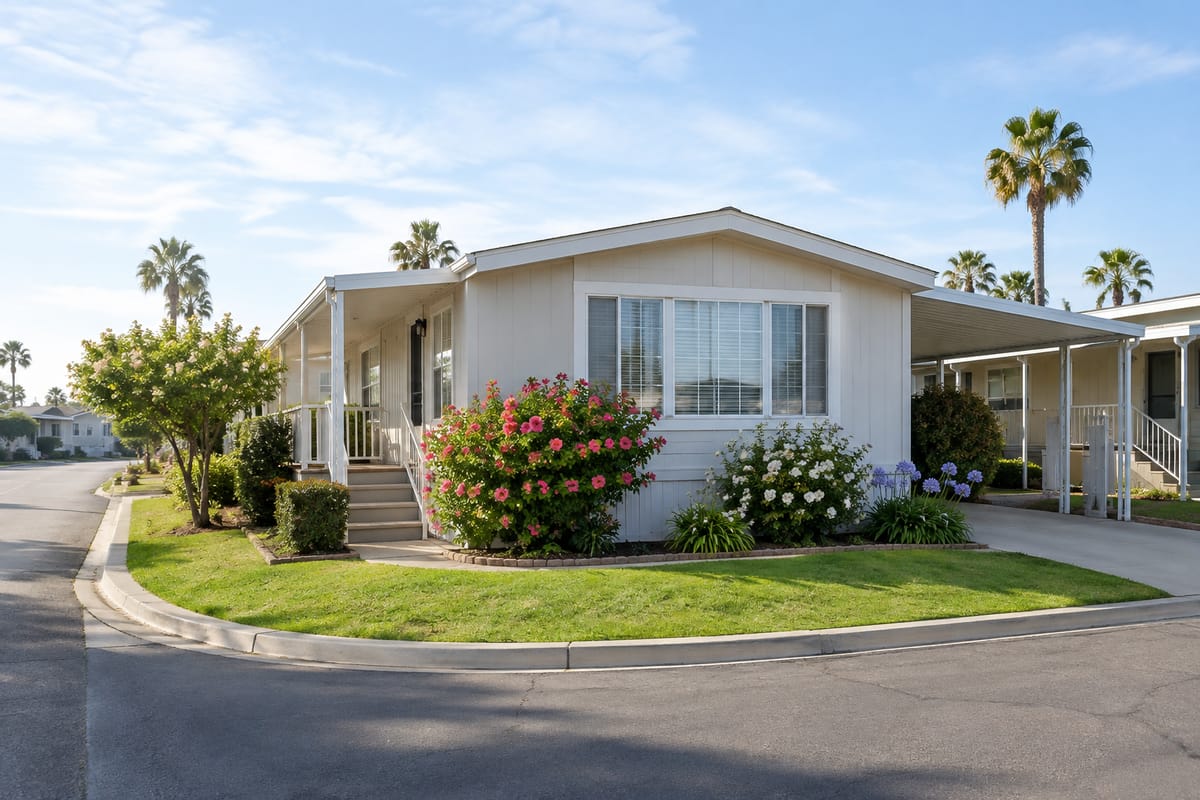
The first thing to establish on a manufactured home deal is whether the home is personal property or real property. That one fact decides the contract, the escrow, the agency that holds the ownership record, how value is supported and the kind of loan your buyer applies for. The second is whether the land under the home is rented. If it is, the community has to approve your buyer as a resident, and that review is separate from the loan.
Both can be found out at the listing appointment or before the offer. Found in the middle of escrow, either one can cost the closing date.
Start with what is being sold
A manufactured home on a rented space in a community is personal property. The home is titled on its own, the way a vehicle is, and the land stays with the community. Your buyer is buying a home and taking on a rental agreement for the space.
A home on land its owner holds can be either. It is real property only if it was permanently attached to the land and that change was recorded, with a 433A in California or an Affidavit of Affixture in Arizona. A foundation, a fenced lot or a line in the listing remarks does not settle it.
If nothing was recorded, the home generally still has its own title while the land has a deed, and the two transfer separately. How to check a home’s status from the records is covered in personal property vs. real property.
How the deal differs from a site-built sale
For a home in a community, almost every line of a familiar house sale has a different answer.
A site-built house compared with a manufactured home on leased land
| Part of the deal | Site-built house | Manufactured home on leased land |
|---|---|---|
| What transfers | House and land, by deed | The home only, by title. The land stays with the community |
| Ownership record | County recorder | HCD in California. ADOT MVD in Arizona, generally one title per section |
| The buyer’s loan | A mortgage on real property | A home-only (chattel) loan secured by the home |
| Who has to approve | The lender | The lender, and the community in a separate review |
| Value support | An appraisal using nearby sales | Sales of similar homes in communities, or an appraisal, as the program requires |
| Monthly cost the lender counts | Payment, taxes and insurance | Payment, taxes or fees, insurance and space rent |
A manufactured home recorded as real property sits closer to the site-built column: a deed, county records, and an appraisal of the home and land together. It still needs things a site-built house does not, such as the recorded 433A or Affidavit of Affixture and the home’s HUD label and serial numbers.
What to get from the seller at the listing appointment
Title problems on manufactured homes are usually old and ordinary: an owner who has died, a divorce that never reached the title, a paid-off loan that still shows a lienholder. They can usually be cured, but curing takes time, so ask at the listing and not in escrow.

That last answer changes the transfer paperwork. HCD’s transfer instructions differ for the two kinds of home, and for a home on local property tax HCD withholds the transfer until it has a tax clearance certificate, or a conditional one, from the county tax collector (Health and Safety Code section 18092.7). In Arizona, the MVD issues a separate title for each section, so a double-wide has two titles to find.
Santiago Financial, Inc. asks a seller most of the same questions on its Seller Interview form during a financed purchase, so answers collected at the listing get used again.
Put the community’s approval in the contract
On leased land the community decides whether to accept your buyer as a resident, on its own criteria, and a loan approval does not bind it. A closing needs both decisions, which means three things for the offer:
- Address the approval in the contract. Say whether the purchase depends on it, and what happens to the deposit if the buyer is not approved.
- Use the right form. The standard residential purchase agreement is written for real property. Ask your broker which agreement your office uses for a manufactured home sold as personal property.
- Get the space terms in writing first. That means the current rent for that space, what it includes, the rental agreement the buyer will sign and the community’s rules.
In California, the Mobilehome Residency Law covers the sale of a home that will stay in the park, including management’s review of the buyer. HCD links to the law from its page on your rights as a mobilehome park resident. In Arizona, park tenancies come under the Arizona Mobile Home Parks Residential Landlord and Tenant Act. What a community asks of a buyer, and how the two approvals run side by side, is laid out in the buyer’s guide to resident approval.
Read the buyer’s letter before you rely on it
A pre-qualification letter covers less of a manufactured home deal than it does of a house sale. It usually reflects what the buyer told the lender. The home, the community, the value and the title are all still to be reviewed.
Ask the lender what was verified, and whether the letter was written for a home on leased land or for a home with land, because those are different loans. Not every mortgage lender makes home-only loans, so confirm that the lender named on the letter finances the kind of property you are writing on. What stands behind each kind of letter is explained in pre-approval vs. pre-qualification.
How value is supported when comparable sales are thin
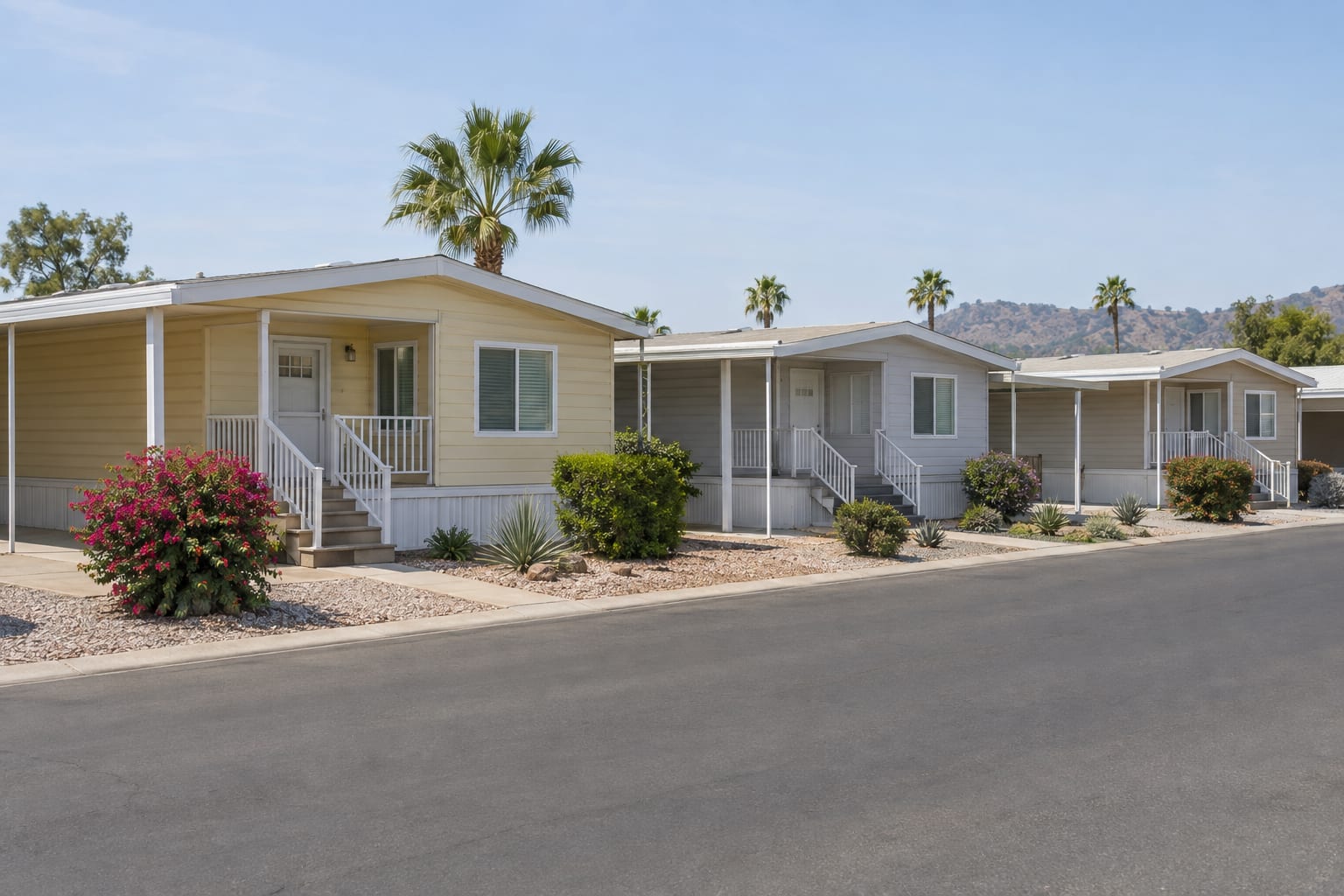
Homes in communities do not always appear in the MLS, so the comparable sales you would pull for a house may be few or missing. Price from sales of similar homes in the same community, or in comparable ones nearby: similar size, similar age, similar space rent.
In California, Santiago Financial’s comparable sales reports list reported sales in a chosen park or community. A report is sales data, not an appraisal or an opinion of value, and the lender’s own appraisal or value review is still ordered as the program requires.
If the lender’s value comes in below the contract price, the loan amount is measured against the lower figure. The buyer can bring more cash, the two sides can renegotiate, or the contract decides whether the buyer can withdraw. That is better settled in the offer than argued later.
Before you write the offer
Each line below closes off one of the problems described above.
The things that make a file wait are predictable: appraisal scheduling, the community’s review, a title question, a missing document. Timing depends on the transaction and the third parties involved, so set a closing date after asking the lender and the community office what each still needs.
If you have a listing or a buyer and want to check any of this before the offer, the referral steps are on our page for dealers and agents. The same page links the partner forms and the companion guides for dealers and park managers.