Buying a Manufactured Home in Temecula, California: A Preparation Checklist
Getting ready to buy a manufactured home in the Temecula area comes down to five jobs: name the kind of purchase you are making, build a monthly budget that includes more than the loan payment, set aside cash beyond the down payment, read your credit reports, and gather the documents a lender asks for. Do them in that order, because the first one changes the other four. Then ask for a pre-qualification and take a short list of questions to every showing.
This is the preparation list. For how the towns and land setups around Temecula differ, start with the guide to Temecula and the surrounding wine country.
Name the kind of purchase before anything else
Around Temecula a manufactured home is usually one of three purchases. It may be a home on a rented space in a community. It may be a home on its own lot in a subdivision, often with a homeowners association. Or it may be a home on rural land, such as the acreage east of the city toward wine country.
Each one asks you to prepare something different.
What to prepare for each kind of purchase
| Home in a community | Home on its own lot | Home on rural land | |
|---|---|---|---|
| Figure to get in writing | Space rent and its recent increases | Association dues and what they cover | Costs of the well, septic system, propane and road |
| Second review besides the loan | The community’s resident application | The association’s rules | Zoning, access, water and septic |
| Papers to ask the seller for | HCD registration or title; the community’s rules | Recorded foundation documents; association rules | Recorded foundation documents; well and septic records |
A home on a rented space is financed by itself as personal property with a home-only (chattel) loan. A home that is permanently attached to land you are buying can often be financed together with the land. Santiago Financial, Inc. finances both, so say which one you are looking at in your first conversation.
Build the monthly budget from every line
Lenders compare your monthly housing cost (payment, taxes, insurance, and any space rent) with your gross monthly income. Acceptable ratios depend on the program, your other debts, and disposable income. Your own budget should go further than the lender’s, because some costs never appear in a loan file:
- The loan payment. Try a few prices in the payment calculator. The results are educational estimates, not a loan offer.
- Space rent, or the costs of owning the land. In a community, space rent is paid on top of the loan payment. On an owned lot, budget property tax on the land and any association dues.
- Tax on the home itself. A home first sold new on or after July 1, 1980 is on the county property tax roll. An older home may instead carry an annual license fee paid to HCD. The Board of Equalization explains the difference.
- Insurance. A loan requires a homeowner’s policy, so get a quote for the specific home.
- Utilities. Summers inland are hot. Ask the seller for a year of electric bills; on rural land, add propane and upkeep of the well and septic system.
- The commute. If you work in San Diego County or Orange County, fuel and time belong in the budget.
Set aside cash beyond the down payment
There is no single down payment. It depends on the program, your credit, the home, and whether the land is leased or owned. How down payments work on a manufactured home loan covers what moves the requirement up or down.
The down payment is also not the only cash you will need. Plan for closing costs (escrow, title or registration fees, the value review), the first insurance premium, whatever the community charges at move-in, the move itself, and a reserve for the first repairs.
Keep the money where a statement can show it. A lender asks for recent bank statements and will want any large, recent deposit explained.
Read your credit reports before a lender does
You can get your reports free at annualcreditreport.com. Look for accounts that are not yours, balances that are wrong, and debts shown as open that you paid off. Dispute any errors with the credit bureau that reports them, and avoid opening new accounts while you are shopping for a home.
Credit requirements vary by program and investor. Ask what applies to your scenario instead of aiming at a number you read somewhere. If you have a few months before you plan to buy, preparing your credit for a manufactured home loan lays out what to do in each of them.
Gather the documents once
You do not need every item to start a conversation. A lender will tell you exactly what is needed after the first review.
Ask for a pre-qualification, and know what it is
A pre-qualification is an early read on what price range may be realistic, based mostly on what you tell the lender. It is worth having before you tour homes. Pre-qualification is not final approval: the home, its value, the title, the community and your documents are all reviewed after you apply.
Ask two things when you receive one. First, what was checked and what was taken on your word; pre-approval and pre-qualification compared explains why that matters more than the name on the letter. Second, ask when a rate can be locked; this usually happens after you apply, not at pre-qualification.
Questions to ask before you make an offer
The questions depend on the kind of purchase you named at the start.
- In a community: What is the space rent today, what does it include, and how has it changed? Is the community age-qualified? What does the resident application require? Community approval and lender approval are separate reviews, and you need both.
- On an owned lot with an association: What are the dues, what do they cover, and what do the rules say about exterior changes and renting the home out?
- On rural land: Is a manufactured home allowed under the parcel’s zoning? Is the home on a foundation system, and was it recorded? Where are the well and the septic system, and are there permits for them? Is the address in a mapped fire hazard or flood zone?
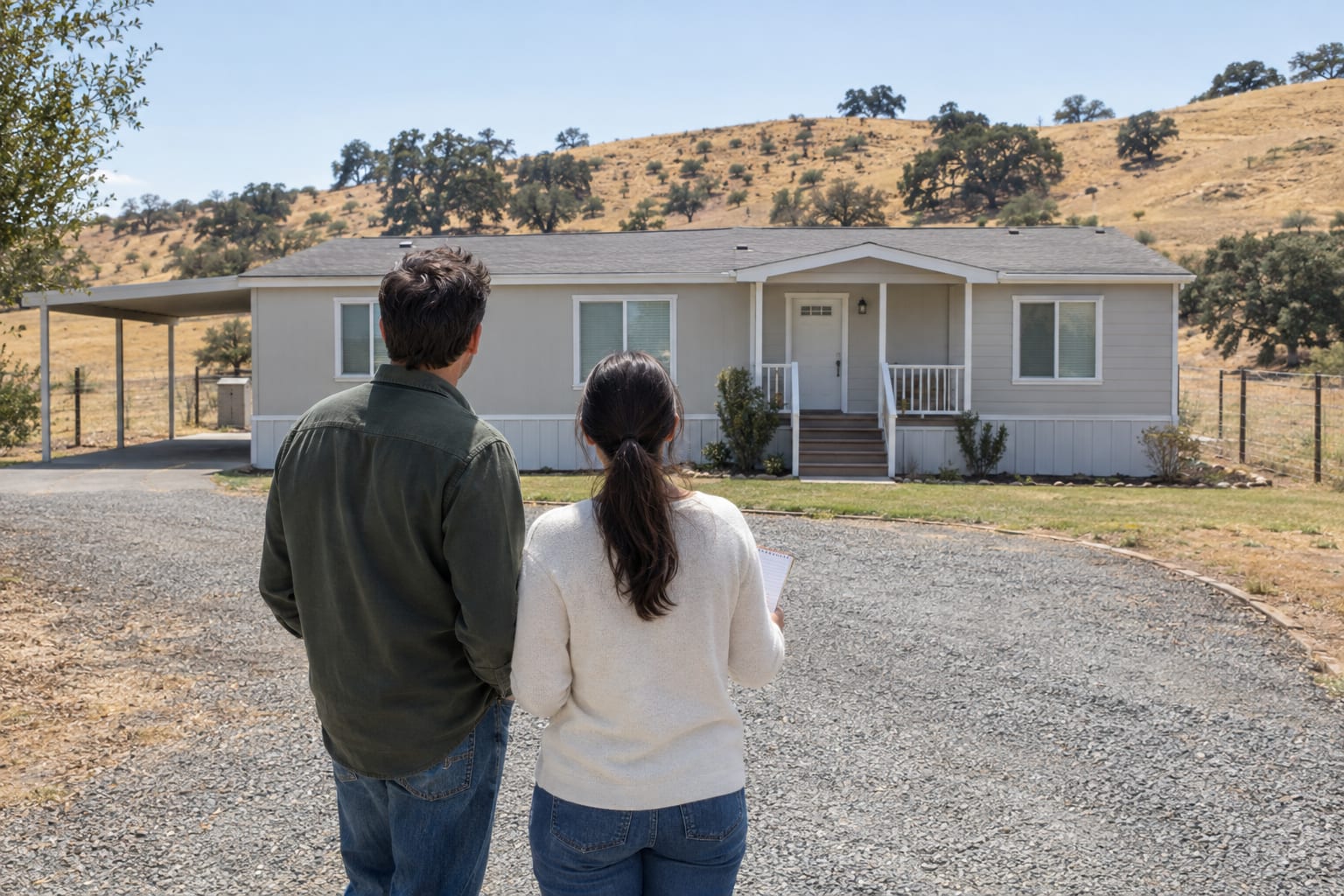
The land east of Temecula is unincorporated, so zoning and septic questions there go to Riverside County, not the city. The regional guide linked at the top lists the offices and maps to use.
When the list is done, see what to have handy and start an application. All financing is subject to credit approval, and not all applicants or properties qualify.