
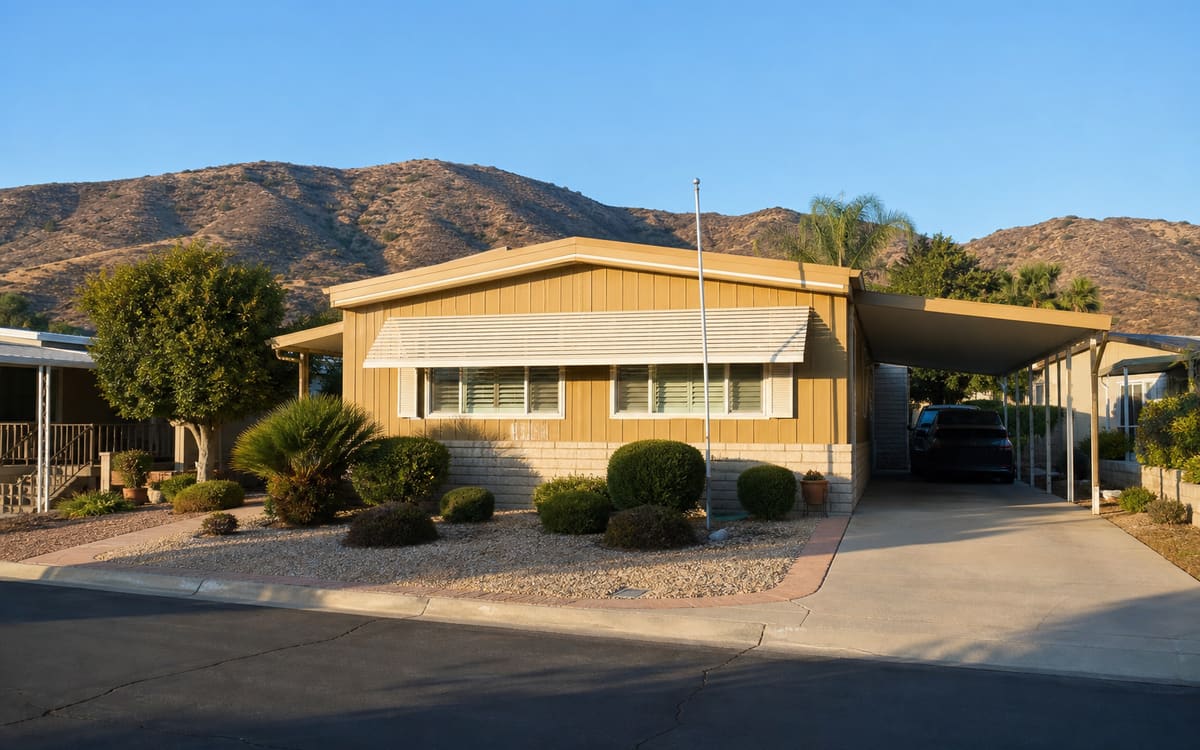
Buying a manufactured home in El Cajon raises three questions that a home on the coast does not. Which jurisdiction is the park in, because the city and the unincorporated county communities around it, Lakeside and Spring Valley among them, run under different local offices? What does summer heat do to the cooling bill? And is the address in one of the fire hazard zones that CAL FIRE remapped for local areas in 2025? New FEMA flood maps for the city took effect in March 2026 as well.
Santiago Financial, Inc. finances homes across East County, in land-lease communities and on owned land. In a park the loan is a home-only or chattel loan on the home by itself, with space rent on top of the payment; on a lot of your own, the home and land can often be financed together with a land-and-home loan. The California manufactured home loans page has the statewide basics. All financing is subject to credit approval.
City or county: the jurisdiction changes who you call
El Cajon’s municipal code includes a chapter on mobile home rent mediation (Chapter 5.82). Its terms are not summarised here; read the chapter and ask the city what applies to a particular space. Lakeside and Spring Valley, just outside the city, are unincorporated county communities. There the County of San Diego, not a city, is the local jurisdiction, and the county’s environmental health department inspects mobilehome parks in the unincorporated area under Title 25, the state’s park regulations (County of San Diego, mobile home parks).
The direct way to settle which applies is HCD’s park search, which shows the jurisdiction a park sits in and its enforcement agency (HCD, local enforcement agencies). California’s Mobilehome Residency Law applies on either side of the line, and HCD’s Mobilehome Residency Law Protection Program helps with certain disputes between residents and park management. This is general information, not legal advice.
Heat, fire and the new flood maps
The National Weather Service’s climate memorandum for San Diego describes a wide variation in temperature within short distances: a daily range of about 15 degrees in the city that grows to 30 degrees or more a few miles inland, with the hottest days arriving on Santa Ana winds in September and October, especially in the eastern sections and outlying areas (NOAA Technical Memorandum NWS WR-275). El Cajon sits in that inland zone, and on an older home with an ageing air conditioner the difference shows up in the electric bill.
Three East County factors and what to check
| Factor | What the official source says | What to do before you make an offer |
|---|---|---|
| Summer heat | The daily temperature range roughly doubles a few miles inland; Santa Ana winds bring the hottest days in September and October | Ask the seller for last summer’s electric bills, check the age of the air conditioner, and read the thermal zone on the home’s data plate |
| Wildfire | CAL FIRE released new fire hazard severity zone maps for local areas on March 24, 2025, in moderate, high and very high classes; the city posted its maps for review | Look up the address on the state map; in a high or very high zone, expect a natural hazard disclosure and get an insurance quote early |
| Flood | New FEMA flood maps for the cities of San Diego, Santee, Poway and El Cajon took effect March 3, 2026, after the San Diego River was restudied | Look up the address on the current FEMA map, not an older report, and ask whether flood insurance would be required for the loan |
Sources: Heartland Fire & Rescue on the 2025 maps, the City of El Cajon’s fire hazard severity zone maps, the State Fire Marshal’s zone maps, the flood map update notice and the FEMA Flood Map Service Center.
Fire is part of East County’s record. The 2003 Cedar Fire, listed by CAL FIRE at 273,246 acres and 2,820 structures destroyed, started in the Cleveland National Forest about 25 miles east of San Diego and burned west into the city (CAL FIRE; City of San Diego Fire-Rescue). Whether an insurer will write the address, and at what premium, is a question to settle before you commit rather than after; the manufactured home insurance team can quote the exact address.
Older homes and the records behind them
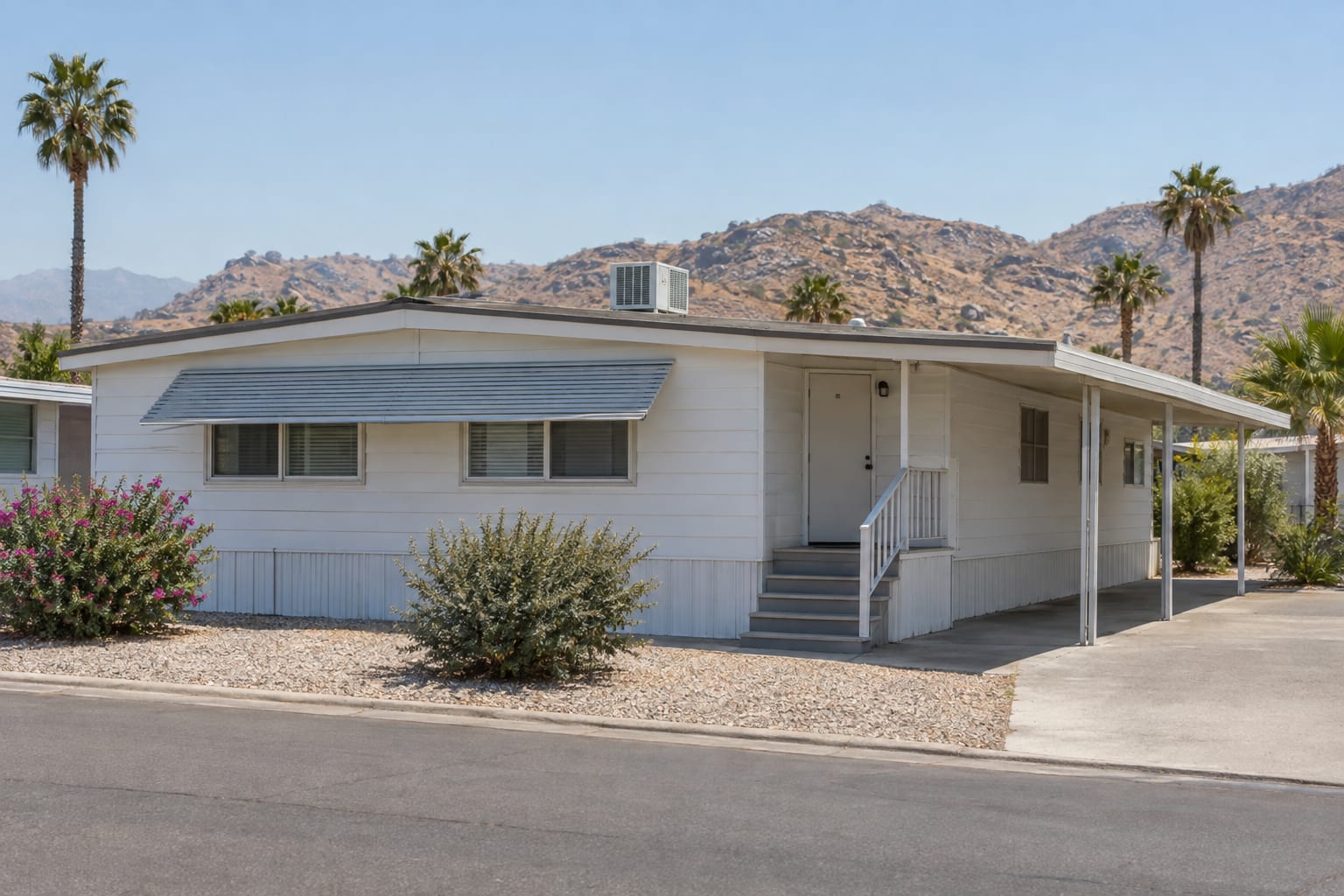
If the home you are looking at is older, two dates matter. A factory-built home from before June 15, 1976 is, technically, a mobile home rather than a HUD Code manufactured home, and programs treat the two differently; the data plate inside the home gives the date.
The second date is a tax date. The county says manufactured homes are on local property tax after July 1, 1980, while some older homes remain on the annual vehicle license fee (San Diego County Treasurer-Tax Collector). Either way HCD requires a county tax clearance certificate when the home is sold, which escrow usually requests.
Title goes through HCD, not the DMV, and our San Diego page has a table of which county office holds which record. Ask the seller for the HCD title or registration and any lien releases before you make an offer; California HCD title basics explains what to look for.
Community approval and lender approval run separately, and a purchase closes only when both are done; how the loan process works lists the steps.
Nearby pages in San Diego County
For the county records table and the city’s park overlay zone, see the San Diego page linked above. Chula Vista in the South Bay reviews space rent under a city ordinance and inspects its own parks. Escondido and San Marcos and Oceanside are the North County pages. Homes in Santee, La Mesa, Lakeside or Spring Valley are financed the same way; what changes is the local office you call.