
Why Mobile Home Loan Denials Happen (And How to Avoid Them)
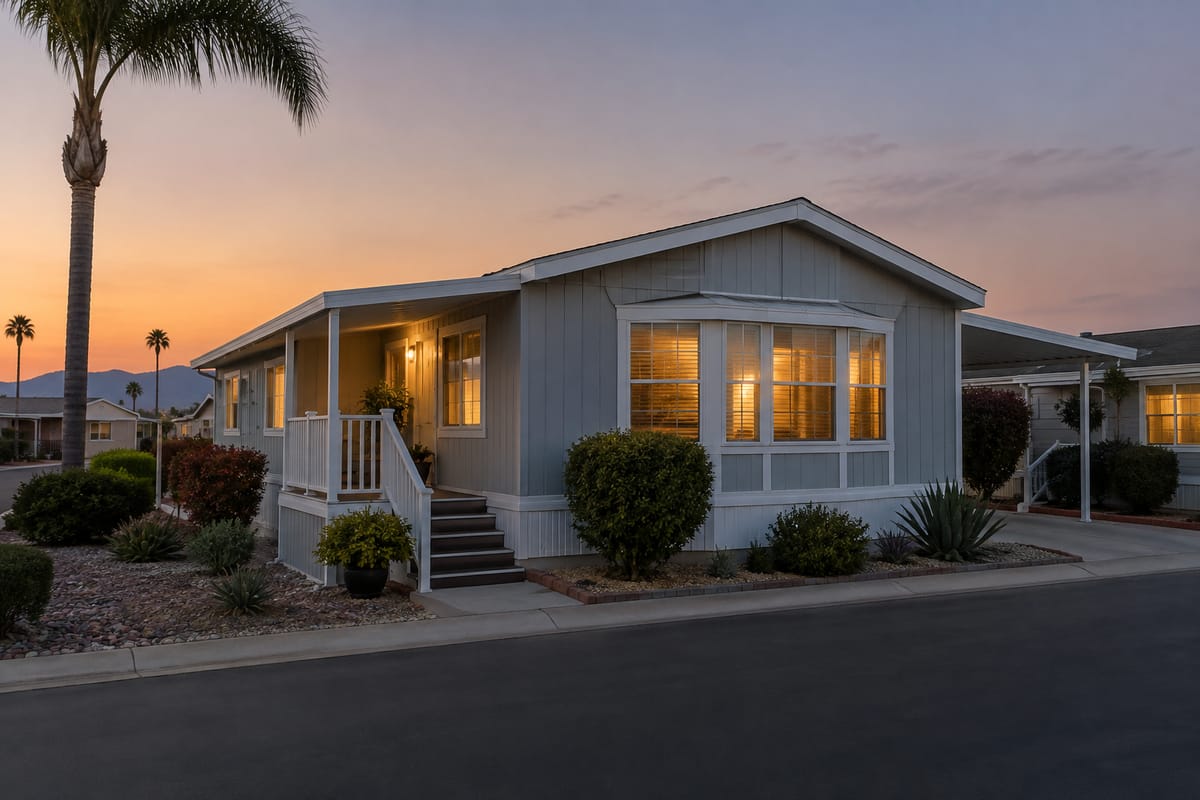
A manufactured home loan can be turned down for reasons that have nothing to do with you. Three things are reviewed: the home, the community it sits in, and the borrower. They are often reviewed by different parties, and a problem with any one can stop the loan. Most of these problems can be checked before you make an offer, which is when one is cheapest to find.
Three reviews, and what can stop the loan in each
Who reviews what on a manufactured home purchase
| What is reviewed | Who decides | What can stop the loan |
|---|---|---|
| The home | The lender, relying on an appraiser, the title agency and an insurer | Identity, condition, value, title, insurance |
| The community | The community’s management | Resident approval, space rent, lease terms |
| The borrower | The lender | Income documents, monthly cost, credit, changes during the file |
The home and the community have nothing to do with your credit, which is why a buyer with a strong file can still be turned down.
When the home is the problem
The first thing a lender establishes is what the home is. A manufactured home built on or after June 15, 1976 was built to the federal HUD Code and carries a metal HUD label on the outside of each section. A home built before that date has no label, is technically a mobile home, and is treated differently by lenders. Not every program accepts one, so give the year before you make an offer and ask.
A later home with a missing label is a different problem, and not necessarily the end of the purchase. HUD does not reissue labels, but a Letter of Label Verification can be requested for many homes. Where to find the label, the data plate and the serial number is covered in HUD label, data plate and serial number.
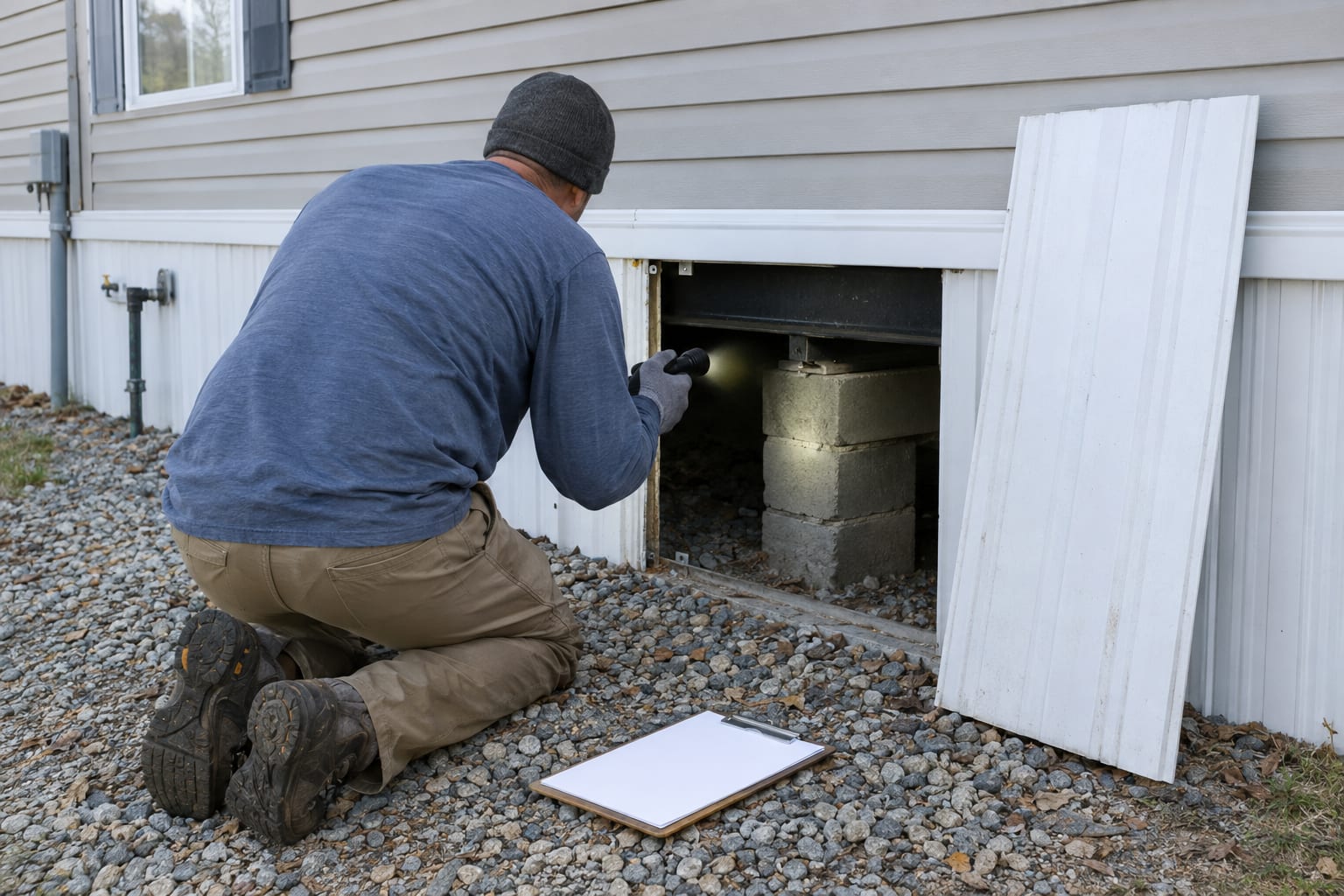
Four more things about the home can stop a loan:
- Condition. A sagging roof, soft floors, unsafe wiring or failing supports can make a home unacceptable as collateral until it is repaired. An inspection is how you find out before the appraiser does.
- Value. The loan is measured against the value an appraiser or comparable sales can support. If that is below the price, the loan is reduced or declined unless the price or your cash changes. For homes in California communities, comparable sales reports show what similar homes sold for. They are not appraisals.
- Title. California titles and registers manufactured homes through HCD, not the DMV. Arizona titles are handled by the MVD, generally one title per section. The seller named on the purchase agreement has to be the owner on record, and any earlier loan on the home has to be paid off and its lien released.
- Insurance. Lenders generally require acceptable insurance on the home before closing. What an insurer offers depends on the home’s year, condition and location, so get a manufactured home insurance quote before you commit, not after.
When the community is the problem
A home on leased land needs two approvals. The lender decides whether to finance the home. The community decides, under its own criteria, whether to accept you as a resident. Passing one does not mean you will pass the other, and both must be in place before closing. How community resident approval works explains what communities review.
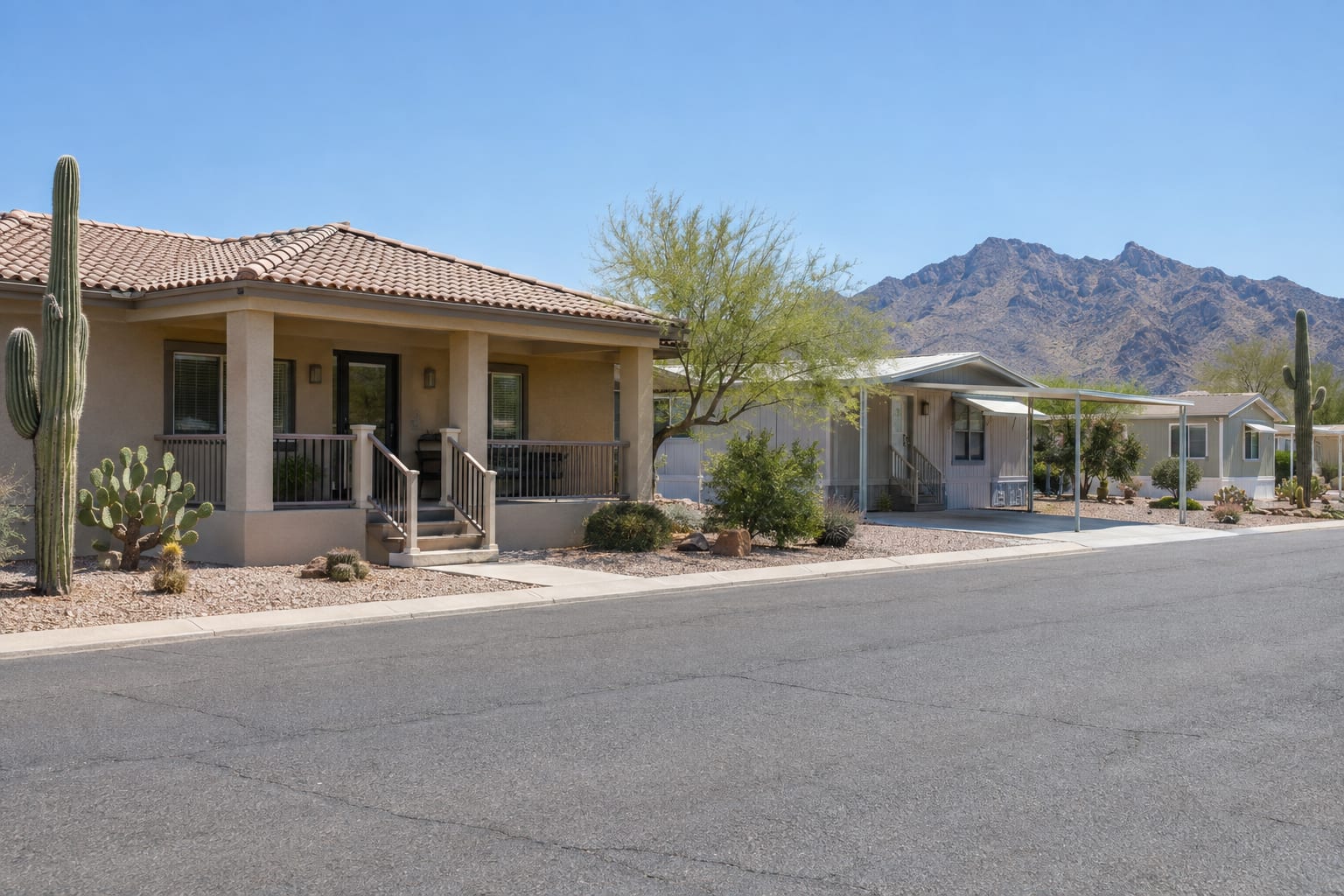
The community also affects the loan itself. Space rent is paid on top of the loan payment and counts as housing cost, so a home that fits your income in one community may not fit in another with higher rent. Before you offer, ask the manager for three things in writing: the current space rent, the lease or rental agreement you would sign, and any conditions the community places on the sale of this home.
When the borrower’s file is the problem
The borrower’s side of the file fails in four ways:
- Income. A lender can count only the income it can verify. Cash pay with no records, self-employment income that the tax returns do not show, and a very recent change of job are the usual trouble spots.
- Monthly cost. The lender adds the loan payment, space rent, insurance, taxes and your other debt payments, and compares the total with your gross monthly income. Acceptable ratios depend on the program. A car loan taken out shortly before you apply can change the result.
- Credit. Late payments, collection accounts, and a past bankruptcy or foreclosure all draw questions. Credit requirements vary by program and investor. Free reports are available at annualcreditreport.com, and reading yours before you apply means nothing in it will surprise you.
- Changes during the file. If the loan amount, the down payment or the borrowers change after a decision, the file is reviewed again. New debt or a job change before closing can have the same effect.
Missing paperwork is rarely a reason for a decline by itself, but it is the most common reason a file sits. Complete files move; files waiting on one document do not.
What we look at before you make an offer
Santiago Financial, Inc. finances only manufactured and mobile homes, in California and Arizona, so the questions above come up at the start of a file, not at the end. If you call before you make an offer, a specialist will ask about:
- the home: its year, make, size, and serial number or HUD label if you can find them;
- the land: leased or owned, and for a community home, the community’s name and current space rent;
- the seller: a dealer or a private party, and whether a loan is still owed on the home;
- you: income, monthly debts and the cash you have for the purchase.
That conversation is a pre-qualification. It is an early estimate, not final approval, and it cannot promise an outcome. What it can do is flag the problems that are visible from the start: a pre-1976 home, a missing label, a space rent that changes the numbers. Pre-approval and pre-qualification compared explains what each stage does and does not prove. To have a home looked at before you commit to it, talk with a specialist.
If you are turned down, find out exactly why
A decision is not always yes or no. A counter-offer, with a different loan amount or down payment, is not a decline, and you can accept it, decline it or discuss alternatives.
If the answer is no, you are entitled to know why. The Consumer Financial Protection Bureau explains that a lender must send a notice that either gives the specific reasons or tells you how to request them. If your credit report played a part, the notice names the credit reporting company, and you can get a free copy of that report. This is general information, not legal advice.
Then sort the reason into one of the three groups. If it was the home, a different home may not have the problem. If it was the community, a similar home in another community may work. If it was income, debts or credit, something has to change before the answer can, and it is worth asking what would need to be different.
A decline from a bank does not by itself mean a manufactured home loan is unavailable. Many lenders finance manufactured homes only on owned land, so a bank that turns down a home in a community may not make that kind of loan at all. Every application is reviewed individually, and not all applicants or homes qualify.